
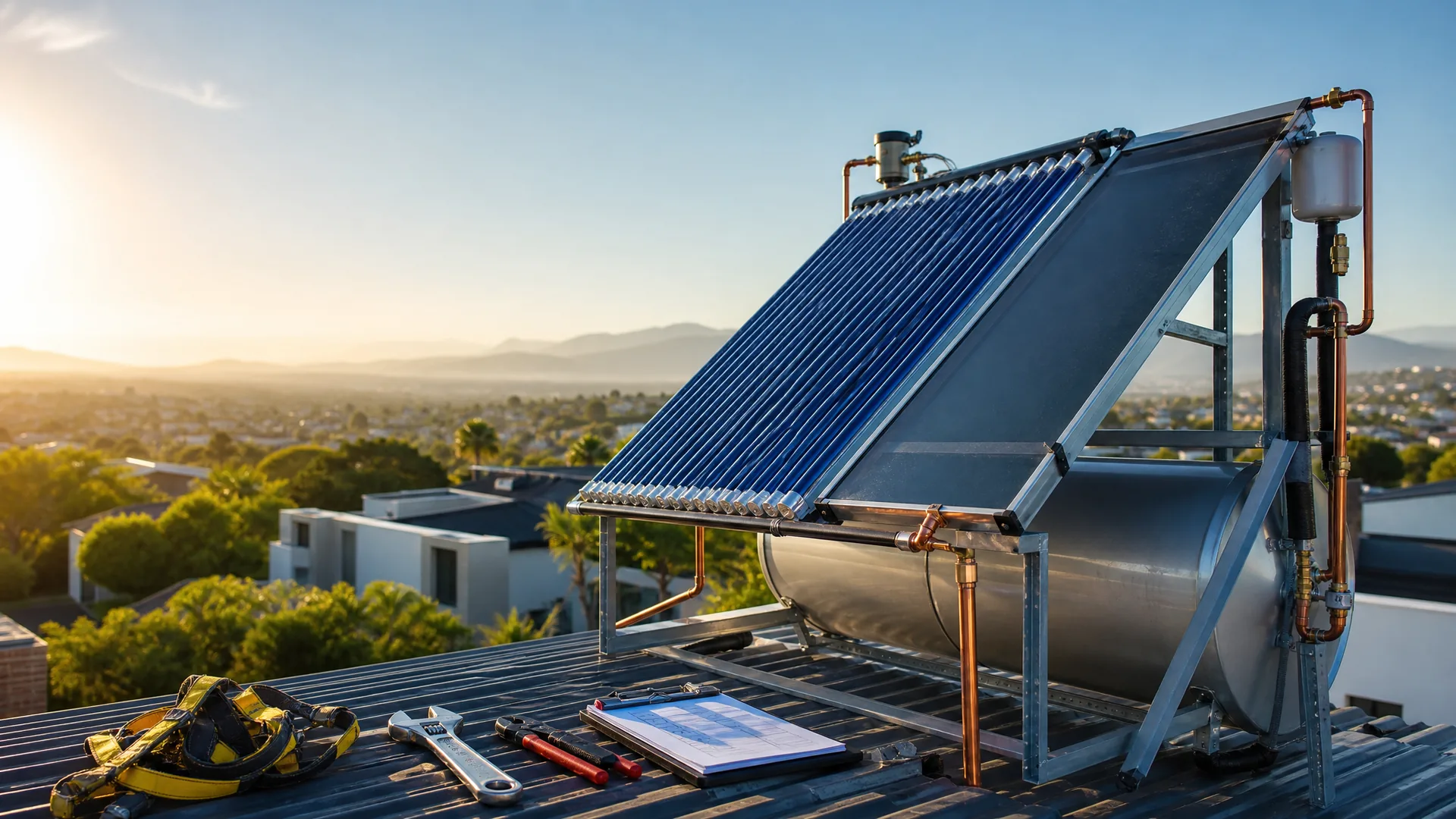
Solar Geyser Installation Cost South Africa: 2026 Guide
Understanding the true solar geyser installation cost in South Africa is harder than it should be. Most quotes you find online are vague, outdated, or ignore compliance requirements entirely. This guide breaks down what you’ll actually pay in 2026, for the unit, the labour, and the paperwork, and shows you whether the investment makes financial sense for your home.
What Does a Solar Geyser Cost in South Africa?
The short answer: a fully installed residential solar geyser system in South Africa typically costs between R8 000 and R30 000, depending on system type, tank size, and brand. That’s a wide range, so here’s what drives it.
Solar Geyser Prices by System Type
There are two main collector technologies:
- Flat-plate collectors, lower upfront cost, simpler design, well-suited to warmer coastal regions. Entry-level 150L flat-plate systems start from around R8 000–R12 000 installed.
- Evacuated-tube collectors, more efficient, better cold-weather performance, and better suited to Gauteng’s winter temperatures. Installed costs typically run R12 000–R22 000 for a 150L–200L system.
Within each type, you also choose between:
- Direct systems, water circulates directly through the collector. Cheaper, but cannot handle frost. Not suitable for Johannesburg or the Highveld.
- Indirect (frost-protected) systems, use a glycol loop to protect the system when temperatures drop below zero. A 150L indirect evacuated-tube system is the most common residential installation in Gauteng, and the frost protection is non-negotiable on the Highveld.
Tank size is the other major cost variable. A 100L system suits a 1–2 person household; 150L covers a small family; 200L–300L systems handle larger households. Each step up in size adds to both the hardware and the installation cost.
What Drives the Price Up or Down?
Key factors that affect your final solar geyser price in South Africa:
- Brand tier, local mid-range brands are competitively priced; imported European or premium brands carry a premium.
- Roof type and condition, a tiled roof needs different mounting hardware than IBR sheeting. A structurally weak roof may need reinforcement before installation.
- Distance from the geyser to the roof panel, longer pipe runs mean more insulated piping and more labour.
- Existing plumbing setup, if your current geyser connections are non-standard, additional plumbing work adds cost.
- Pump-driven vs. thermosiphon, thermosiphon systems use natural convection (no pump, lower running cost), but require the tank to sit above the collector. Pump-driven systems are more flexible in placement but add a pump, controller, and a potential maintenance point.
Solar Geyser Installation Costs: Labour, Compliance & Hidden Fees
The unit price is only part of the picture. Labour, compliance, and ancillary components together typically add R3 000–R7 000 on top of the hardware cost.
What a Professional Installation Includes
A proper solar geyser installation covers:
- Site assessment, roof orientation, shading analysis, structural check, and existing plumbing review
- System mounting, securing the collector frame and tank brackets to the roof structure
- Plumbing connections, feed, return, and pressure control valve installation
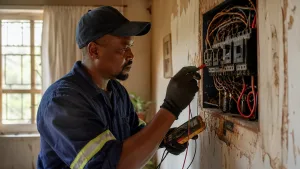
- Electrical connection, most systems include an electrical element backup; this wiring must be done by a licensed electrician
- Commissioning, filling, bleeding, and testing the system before sign-off
- Pressure control valve (PCV) and temperature/pressure relief valve (T&P valve), required for safety and often not included in base quotes
Watch out for quotes that exclude any of these items. A low quote that omits the PCV, the electrical backup connection, or the COC fee is not a saving, it’s a liability.
Cutting corners on installation also voids most manufacturer warranties and can invalidate your home insurance if a water damage claim arises.
COC and Compliance Requirements in South Africa
Any work that touches electrical connections, including the backup element of a solar geyser, requires a Certificate of Compliance (COC) under South African law. The COC is issued by the licensed electrician who does the work and is required by your insurer and by the residential electrical inspection in Johannesburg standards that govern Gauteng installations.
COC fees typically range from R500–R1 500 depending on the scope of work. Factor this into your budget from the start. Electricians Near Me includes a free call-out and site assessment so you receive a transparent, itemised cost breakdown, including the COC fee, before any work begins.
Solar Geyser vs. Electric Geyser: True Cost Comparison
An electric geyser costs far less to buy and install upfront, typically R3 000–R6 000 installed for a standard 150L unit. That looks attractive. But the running costs tell a different story.
Electric geysers account for roughly 30–40% of a South African household’s monthly electricity bill, making them one of the largest single energy costs in the home. That figure is used by energy auditors and SANS 10400-XA compliance assessors and reflects a real problem: a geyser runs for hours every day, and electricity tariffs keep rising.
Eskom’s average tariff has more than doubled in real terms over the past decade. Above-inflation increases were approved for 2025 and continued into 2026, directly compressing the payback period for solar water heating. Every tariff hike makes the electric geyser more expensive to run and the solar geyser comparatively cheaper.
Over a 10-year period, the picture looks like this:
| Cost factor | Electric geyser | Solar geyser |
|---|---|---|
| Upfront (unit + install) | Lower | Higher |
| Monthly electricity draw | High | Near-zero (backup element only) |
| Tariff exposure | Full | Minimal |
| 10-year running cost | Very high | Low |
| Total cost of ownership | Often higher | Often lower by year 4–6 |
If load shedding is a concern alongside energy costs, pairing a solar geyser with solar battery backup systems in South Africa or exploring load shedding backup power solutions can push your energy independence further.
Solar Geyser ROI and Payback Period
Here’s a straightforward way to think about payback.
If your electric geyser is currently costing you R8 000–R12 000 per year in electricity, a realistic figure for a 150L geyser running at current Johannesburg tariff rates for a family of four, and a solar geyser reduces that bill by 60–80%, your annual saving is roughly R5 000–R9 000 per year.
Against a total installed system cost of, say, R16 000–R20 000 for a 150L indirect evacuated-tube system in Johannesburg, the simple payback calculation looks like this:
Payback period = Total installed cost ÷ Annual electricity saving
R18 000 ÷ R7 000/year ≈ 2.5–3 years
In practice, most homeowners recover the investment within 3–6 years, depending on system size, household usage, and how steeply tariffs continue to rise. With Eskom’s 2025–2026 increases already locked in and further increases expected in 2027, systems installed today are tracking toward the shorter end of that range.
After payback, the savings are pure return, and most well-maintained solar geyser systems run for 15–20 years.
Solar Geyser Installation Timeline and What to Expect
The process is straightforward when you know what to expect:
- Free site assessment, a technician visits, checks your roof orientation, shading, structural integrity, and existing plumbing. No charge, no obligation.
- Quote, you receive an itemised cost breakdown covering unit, mounting, plumbing, electrical connection, and COC fee.
- Installation day, most residential installations take 4–8 hours. The installer mounts the collector and tank, runs the pipe connections, and wires the backup element.
- Testing and commissioning, the system is filled, bled, and pressure-tested. The controller (if fitted) is configured.
- COC sign-off, your licensed electrician issues the Certificate of Compliance for the electrical work.
- Handover, you’re shown how to monitor the system, when to call for service, and what the warranty covers.
In most cases, you have hot water from the solar system on the same day the installation is completed.
If anything unexpected comes up post-installation, a fault, a leak, or an electrical issue, an emergency electrician can respond quickly so you’re never left without hot water for long.
Solar Geyser Maintenance Costs and Long-Term Upkeep
A solar geyser needs less maintenance than most homeowners expect, but it does need some. Skipping it shortens system life and can void your warranty.
Annual maintenance tasks include:
- Anode rod inspection, the sacrificial anode inside the tank corrodes slowly to protect the tank lining. It needs checking annually and replacing every 3–5 years.
- Frost valve testing, on Highveld systems, the frost valve must be tested before winter to confirm it will open and drain the collector if temperatures drop below zero.
- Pressure control valve check, ensures the PCV is functioning correctly and not leaking.
- Collector panel cleaning, dust and bird droppings reduce efficiency. A clean-down once or twice a year maintains output.
- Glycol fluid check (indirect systems), the heat transfer fluid degrades over time and needs a concentration check every few years.
A professional annual service call typically costs R800–R1 500 depending on the scope and your location. That’s a small fraction of the annual electricity saving the system generates.
With proper solar geyser maintenance, a quality system lasts 15–20 years. That lifespan is what makes the ROI calculation above compelling, you’re not just recovering the install cost, you’re banking a decade or more of savings on top.
Ready to find out exactly what a solar geyser installation will cost for your home? Electricians Near Me offers a free call-out and site assessment with no obligation, you get a full, itemised quote covering unit, labour, compliance, and COC before you commit to anything. Our workmanship is guaranteed and our electricians are fully licensed. Book your free assessment today and get transparent pricing with no surprises.
About author



Add comment