

No products in the cart.

Solar Battery Backup System South Africa Guide for 2026
Load shedding is no longer a crisis South Africans are waiting to end, it is a structural feature of the grid that households and businesses have had to plan around for years. In 2026, a reliable solar battery backup system South Africa homeowners and businesses can depend on has shifted from a luxury to a practical necessity. Whether you’re protecting a home office, a small business, or just keeping the fridge and lights on, the right system makes power cuts manageable rather than disruptive.
Why South African Homes and Businesses Need a Solar Battery Backup System
The Real Cost of Load Shedding on Your Property
Every hour of load shedding carries a real financial cost: spoiled food, lost productivity, damaged equipment from power surges when the grid returns, and the ongoing expense of running a petrol or diesel generator. Over a month of regular outages, those costs add up, and most households feel them directly.
Generators are the traditional fallback, but they come with recurring fuel costs, noise, maintenance, and emissions. For most residential and small-commercial properties, a generator is no longer the most cost-effective or convenient solution.
Why Solar Integration Makes Backup Power Smarter
A solar inverter and battery combo South Africa properties can install does something a generator cannot: it charges itself during daylight hours using free solar energy, then dispatches stored power automatically during an outage. No fuel runs, no startup noise, no manual switching.
Solar integration also reduces your Eskom bill on sunny days, even when there is no load shedding. A standalone generator provides none of that ongoing value. For urban and suburban properties still connected to the grid, that combination of savings and reliability is why solar-plus-battery has become the dominant backup choice in 2026.
How a Solar Battery Backup System Works: Key Components Explained
Solar Panels, Inverter & Battery, How They Connect
A solar battery backup system has three core components:
- Solar panels generate DC electricity from sunlight and mount on the roof.
- The inverter converts DC power to the AC power your appliances use, manages charging, and handles the switchover between solar, battery, and grid power.
- The battery bank stores surplus solar energy so it is available at night or during an outage.
During the day, panels power your home and charge the battery. When load shedding hits, the inverter switches to battery power, typically in milliseconds, which most appliances handle without issue. When the battery is depleted and the sun is down, the system draws from the grid as normal.
Hybrid vs Off-Grid vs Grid-Tied: Which Setup Suits South Africa?
There are three main system types:
- Grid-tied (no battery): Panels feed power to the home and export surplus to the grid. No backup during load shedding, when the grid goes down, so does the system. Useful for bill reduction but not for load-shedding protection.
- Off-grid: No grid connection at all. The system must be large enough to cover all energy needs independently, day and night, year-round. High upfront cost; practical for rural or farm properties far from the grid.
- Hybrid (grid-tied with battery storage): The most practical residential solar battery backup configuration for urban and suburban South African properties. It combines solar self-consumption, battery backup during outages, and grid access as a top-up when needed.
South African solar installation professionals consistently advise that a hybrid system offers the best return on investment for Eskom-connected properties. It covers load shedding, reduces the monthly electricity bill, and keeps future feed-in tariff eligibility open as municipalities expand buy-back programmes.
Best Battery Backup Options for Load Shedding: Brand Comparison
Lithium (LiFePO4) vs Lead-Acid Batteries
Battery chemistry is one of the most important decisions in any system design.
LiFePO4 (lithium-iron-phosphate) batteries dominate the South African market in 2026. They typically deliver 3 000–6 000 charge cycles at 80% depth of discharge, compared to 300–500 cycles for standard flooded lead-acid batteries. Over a 10-year system lifespan, that difference matters, you may replace a lead-acid bank two or three times before a lithium bank needs attention. LiFePO4 batteries are also lighter, require no maintenance, and can be discharged more deeply without damage.
Lead-acid batteries (flooded or AGM) still appear in budget installations because their upfront cost is lower. For occasional or light-duty backup use they can still be practical, but for daily load-shedding cycling the total cost of ownership over time typically favours lithium.
Top Inverter and Battery Brands Available in South Africa
The brands below are widely distributed and serviced across South Africa, making warranty support and spare parts more accessible than lesser-known imports:
| Brand | Type | Notes |
|---|---|---|
| Victron Energy | Inverter/charger | Premium build quality; highly configurable; strong installer network |
| Sunsynk | Hybrid inverter | Popular mid-range to premium option; good local support; feature-rich app monitoring |
| Deye | Hybrid inverter | Competitive pricing; widely used in residential installs; solid performance track record |
| Pylontech | LiFePO4 battery | Dominant lithium battery brand in SA; modular design; compatible with most inverters |
| Freedom Won | LiFePO4 battery | South African-designed and manufactured; strong warranty and local support |
Victron and Sunsynk pair well with Pylontech or Freedom Won batteries in hybrid configurations. Deye inverters are a common choice in value-focused installations without sacrificing reliability. Mixing brands is possible but always confirm compatibility before specifying a system.
Solar Inverter and Battery Combo Costs in South Africa
Typical Residential System Price Ranges
Installed costs for a solar battery backup system South Africa residential properties typically fall into three broad tiers:
- Entry-level (3–5 kVA hybrid inverter + 5 kWh LiFePO4 battery + 4–6 panels): Roughly R40 000–R80 000 installed. Covers essential loads, lights, fridge, router, select plugs, through a standard two-to-four-hour load-shedding slot. This is the most common configuration for urban households wanting the best battery backup for load shedding at a manageable entry price.
- Mid-range (5–8 kVA inverter + 10 kWh battery + 8–12 panels): Roughly R90 000–R160 000 installed. Powers more of the home, extends overnight backup, and meaningfully reduces the monthly Eskom bill.
- Premium (10 kVA+ inverter + 15–20+ kWh battery + 12–20 panels): R180 000 and upward. Suitable for larger homes, small businesses, or properties aiming for near-full energy independence.
A hybrid solar system cost in these ranges reflects 2026 market pricing and will shift as panel and battery prices continue to move.
What Drives the Final Installation Cost?
Several variables push a quote up or down:
- Battery capacity (kWh): The single biggest cost driver. More storage equals higher cost and longer backup duration.
- Inverter VA rating: A larger inverter handles more simultaneous load but costs more.
- Number and wattage of panels: More panels charge the battery faster and generate more daily savings.
- Installation complexity: Roof type, cable runs, DB board upgrades, and whether a new distribution board is needed all affect labour costs.
- Certificate of Compliance (COC): Required by law for all electrical work in South Africa, a compliant installer includes this; an uncertified one is a liability risk.
Choosing the Right System for Your Property: A Practical Checklist
Before requesting a quote, work through these points:
- Daily energy consumption: Check your electricity bill for your monthly kWh usage. Divide by 30 for a daily figure, this sizes your panel array.
- Appliances to back up: List what must run during load shedding. Heavy loads like geysers, air conditioners, and stoves require significantly larger and more expensive systems.
- Available roof space: South-facing roof area (or north-facing in the Southern Hemisphere, meaning north-facing is actually optimal in SA) determines how many panels you can fit.
- Budget: Decide whether your priority is best battery backup for load shedding coverage, maximum solar bill savings, or both. Entry-level systems prioritise backup; larger systems do both.
- Grid-tie eligibility: If your municipality runs a buy-back or net-metering programme, a grid-tied hybrid system positions you to earn credits for surplus solar export.
- Warranty and support: Confirm the installer provides a COC, a system warranty, and carries brands with local service networks.
A professional assessment removes the guesswork. An experienced installer will size a residential solar battery backup system to your actual consumption data, not a generic rule of thumb.
Professional Installation: Why It Matters and What to Expect
A solar battery backup system is a permanent electrical installation, not a plug-and-play appliance. In South Africa, all electrical work must comply with SANS 10142, and a Certificate of Compliance must be issued on completion. Without a COC, your installation is non-compliant, your home insurance may be invalidated, and you cannot legally sell the property without rectifying the work.
Grid-tied and hybrid systems also require notification to your municipality or Eskom before energising. A qualified installer handles this as part of the job; an uncertified one typically does not.
If anything fails during or after load shedding and you need a qualified emergency electrician in South Africa, having a compliant system with documented work makes fault-finding faster and safer.
Electricians Near Me provides free call-out assessments for solar and battery backup installations across South Africa. No call-out fee, no obligation, and all completed installations include a workmanship guarantee and a compliant COC. Our electricians are available 24/7, because power problems do not keep office hours.
Request your free solar battery backup assessment today. Tell us your property type, your rough energy needs, and when suits you, we’ll do the rest.

About author

About Author
Other posts byRelated posts
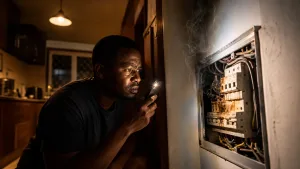
When you search for emergency electrician near me south africa at midnight with a burning smell coming from your DB board, you don't need a... Continue reading

Experts, analysts and even Eskom itself are warning South Africans to brace for higher stages of load shedding. The embattled power utility announced on Sunday... Continue reading
Add comment