
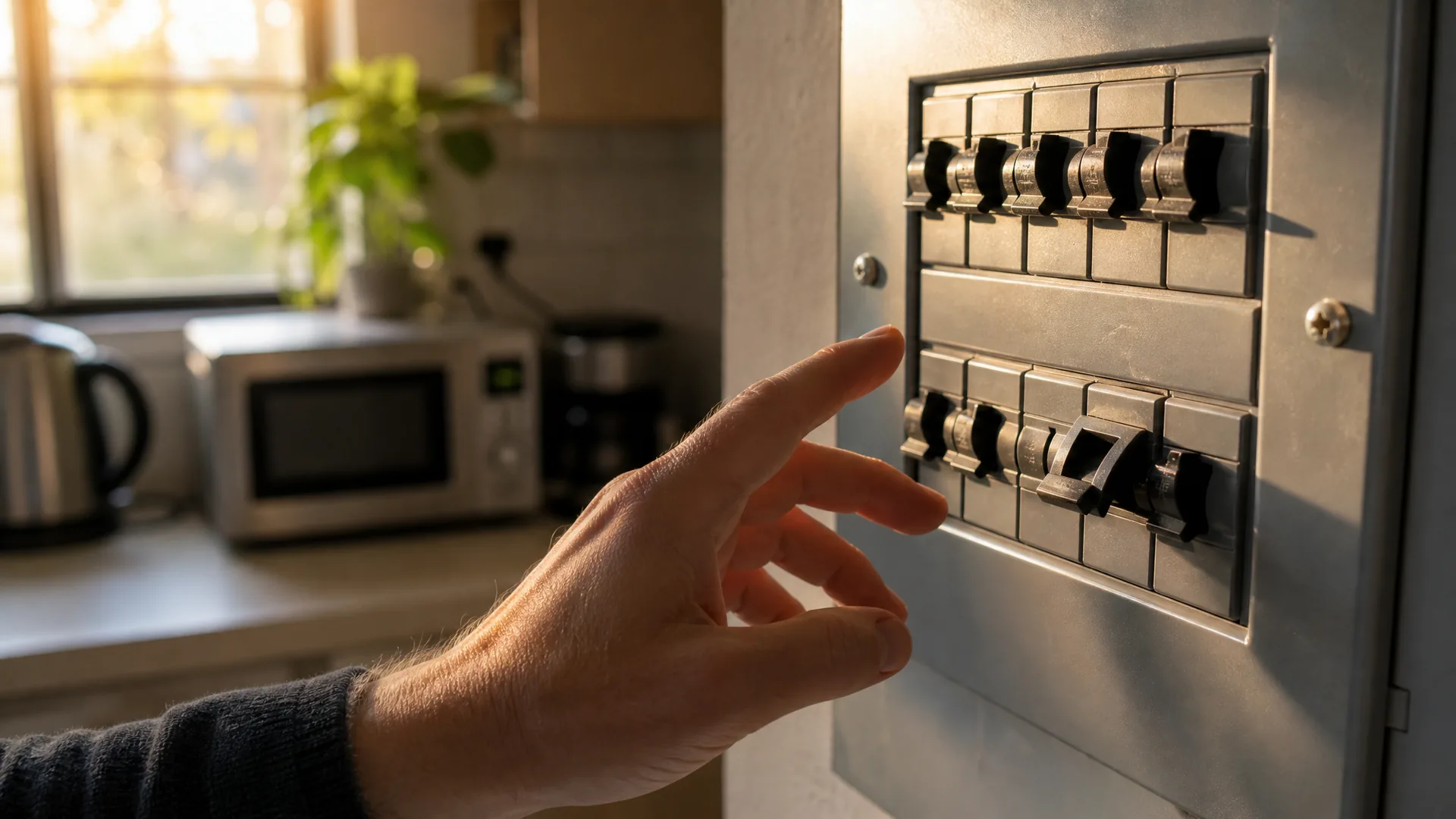
Electrical Circuit Breaker Keeps Tripping? Learn Causes and Solutions
An electrical circuit breaker keeps tripping when it detects a current level that could damage wiring or start a fire, so a trip is always a protective signal, not just an inconvenience. A once-off trip after plugging in a new appliance is usually minor. But if your circuit breaker is tripping frequently, the same circuit fails again minutes after you reset it, or you notice burning smells near the distribution board (DB board), you have a problem that needs proper diagnosis. This guide walks South African homeowners through the three root causes, a safe step-by-step check, the relevant safety standards, and a clear line between what you can handle yourself and when to call a registered electrician.
Why Your Circuit Breaker Keeps Tripping: The Three Root Causes
Every tripped breaker has one of three causes: an overloaded circuit, a short circuit or ground fault, or a breaker that is failing on its own. Knowing which one you’re dealing with determines your next step.
Electrical Overload: Too Many Appliances on One Circuit
An overload happens when the total current drawn by connected appliances exceeds the rated capacity of the circuit. A standard 15 A circuit breaker protecting a kitchen ring main, for example, can trip in seconds if a geyser element, a kettle, and a microwave all draw current at the same time, a common scenario in South African homes where geysers are sometimes wired onto general circuits rather than a dedicated line.
The breaker does exactly what it should: it cuts power before the cable overheats. A once-off overload trip is easy to resolve by switching off some appliances. A circuit breaker tripping frequently on the same circuit, however, means the demand on that circuit is consistently too high for its rated capacity.
Short Circuits and Ground Faults
A short circuit occurs when a live conductor makes direct contact with a neutral conductor, usually due to damaged insulation, a loose connection, or a faulty appliance. The current spike is sudden and large. The breaker trips almost instantly.
A ground fault is similar but involves live current reaching an earthed surface, a cracked appliance casing, a damaged cable near a wet area, or corroded wiring in older homes. Both faults are more serious than a simple overload because they can cause fires or electrocution if the breaker fails to respond. If the breaker trips immediately every time you reset it, suspect a short circuit or ground fault rather than an overload.
The third cause is a breaker that has simply worn out. Breakers are mechanical devices with a finite lifespan. An ageing or faulty breaker may trip under normal load, fail to hold its reset position, or, more dangerously, fail to trip when it should. This is covered in the diagnostic section below.
Electrical Overload Symptoms Every Homeowner Should Recognise
The signs of an overloaded circuit usually appear before the breaker trips. Catching them early can prevent a nuisance trip from becoming a fire risk.
Key electrical overload symptoms include:
- Flickering or dimming lights when a large appliance switches on
- Warm or discoloured switch plates and socket covers on the affected circuit
- Multiple appliances cutting out together rather than a single device failing
- A breaker that feels warm to the touch after tripping
- A faint burning smell near sockets or the DB board
Common Household Appliances That Cause Overloads
High-draw appliances are the most frequent culprits in South African homes. Geysers typically draw between 3 kW and 4 kW. Tumble dryers, air conditioners, and electric stoves draw similar or higher loads. Running any two of these on the same circuit simultaneously is likely to exceed a standard 15 A or 20 A breaker’s rating.
Load-shedding recovery surges add another layer of risk. When Eskom or a municipality restores power after a stage, every appliance left switched on, the geyser, the stove plate left on “warm,” the washing machine mid-cycle, attempts to restart at once. This creates a brief but significant inrush current spike that can trip a sensitive RCCB or an ageing breaker even if the steady-state load would be fine. If your circuit breaker trips frequently immediately after power returns, this surge effect is a likely cause. Investing in load shedding backup power solutions can reduce this risk.
How to Diagnose What Causes a Breaker to Trip: A Step-by-Step Check
For a reliable electrical fault finding and repairs guide for SA homes, the principle is the same: isolate variables one at a time. Follow these steps in order.
Step 1, Switch off or unplug everything on the affected circuit. Turn off lights, unplug appliances, and switch off any built-in equipment like an electric stove or geyser isolator on that circuit.
Step 2, Reset the breaker. See the safe procedure below.
Step 3, If it holds, restore appliances one at a time. Wait 30 seconds between each device. When the breaker trips again, the last appliance you connected is drawing too much, is faulty, or pushed the total load over the limit.
Step 4, If it trips immediately with nothing connected, stop. This points to a short circuit, a ground fault, or a faulty breaker, none of which you should investigate further without qualified help.
Safe Reset Procedure
- Stand to the side of the DB board, not directly in front of the panel face.
- Move the tripped breaker fully to the OFF position first, it often sits in a middle “tripped” position.
- Then push it firmly to ON.
- If it trips again immediately or won’t stay in the ON position, do not attempt a second reset.
Stop immediately if you smell burning, see scorch marks, or hear crackling sounds. Leave the breaker off, switch off the main isolator if you can do so safely, and call an electrician.
Identifying a Faulty Circuit Breaker
A breaker that is failing shows specific signs:
- It won’t hold position, flips back to tripped or off after a correct reset even with no load on the circuit
- It feels hot on the front face, not just slightly warm
- There is a burnt smell or visible scorch marks on the breaker casing or adjacent busbars
- It is physically cracked or discoloured
An ageing breaker may also trip at normal load because its internal bimetal strip has degraded and is no longer calibrated correctly. In that case, the breaker itself is the problem, not the circuit it protects. Replacement is the only fix, and that work must be done by a registered electrician.
South African Safety Standards for Circuit Breakers (SANS 10142)
South Africa’s governing standard for low-voltage electrical wiring installations is SANS 10142-1, published by the South African Bureau of Standards (SABS) and referenced by the Department of Employment and Labour. It specifies that overcurrent protection devices, including circuit breakers, must be rated to match the current-carrying capacity of the conductors they protect. Fitting an oversized breaker to allow a loaded circuit to “pass” is non-compliant and defeats the protection the breaker is supposed to provide, creating a direct fire risk.
Under South African law, replacing a circuit breaker or performing any work on a DB board constitutes electrical installation work. Only a registered electrician holding an RL3 or RL4 licence under the Occupational Health and Safety Act is legally permitted to do this work and to issue a valid Certificate of Compliance (COC). Unlicensed repairs can void your home insurance policy and invalidate any existing COC, which becomes a serious problem when you sell the property or make an insurance claim after a fire.
For a full breakdown of what a COC covers and when you need one, the electrical safety certificate and home inspection in South Africa page explains the process in detail.
Faulty Circuit Breaker Repair: When to DIY and When to Call an Electrician
There is a clear boundary between what a homeowner can safely and legally do and what requires a licensed professional.
What you can do yourself:
- Reset a tripped breaker using the safe procedure above
- Switch off and unplug appliances to reduce circuit load
- Redistribute high-draw appliances to different circuits (plugging a kettle and a microwave into sockets on different circuits, for example)
- Replace a plug fuse in an appliance or extension lead
What requires a registered electrician:
- Replacing a circuit breaker
- Any work inside the DB board
- Investigating or repairing wiring suspected of a short circuit or ground fault
- Upgrading a DB board to add circuits or increase capacity
- Issuing or updating a Certificate of Compliance
In our technicians’ experience attending fault-finding call-outs across Johannesburg and Pretoria, a large proportion of “breaker keeps tripping” complaints are resolved by redistributing loads or replacing an ageing DB board, both tasks that require a registered electrician and result in a valid COC. The cost of a professional repair is consistently lower than the cost of an insurance dispute after an electrical fire.
Warning Signs That Require a Professional Immediately
Call an emergency electrician near you in South Africa without delay if you notice:
- Burning smell from the DB board, a socket, or any wall fitting
- Scorch marks or blackening around sockets, switches, or the distribution board
- A breaker that is hot to the touch
- Sparking when you plug in an appliance or flip a switch
- Flickering lights across multiple circuits simultaneously
- Any sign of water ingress near electrical fittings
These are not nuisance faults, they are fire or electrocution risks. Do not attempt a reset. Switch off the main isolator if it is safe to reach, and call for professional help immediately.
Preventing Your Breaker from Tripping Again: Practical Tips
Once you’ve resolved the immediate fault, a few habits keep it from recurring.
Spread high-draw appliances across circuits. Avoid running the kettle, microwave, and toaster on the same kitchen circuit simultaneously. Move a portable heater or air conditioner to a circuit that isn’t already carrying a heavy load.
Schedule a periodic electrical safety inspection. Homes older than 20 years often have DB boards with breakers that have never been tested or replaced. A residential electrical inspection in Johannesburg, or wherever you are based, identifies ageing components before they fail. Many electricians recommend an inspection every five years for older properties.
Consider a DB board upgrade. If your home was wired for a smaller appliance load than you now run, common in properties built before the widespread adoption of air conditioners, tumble dryers, and multiple entertainment systems, adding circuits or upgrading the board is the permanent fix. A qualified electrician can advise on the correct specification for your home’s actual demand.
Protect against load-shedding surges. A whole-home surge protector fitted at the DB board limits inrush current when power is restored. A battery backup system means your appliances were never left in a mid-cycle, all-on-at-once state when the grid returns. Both options reduce nuisance trips and protect sensitive electronics.
If you’re ready to book a diagnosis or want to understand what a repair might cost, a free call-out quote with no upfront cost removes any barrier to getting a professional assessment. Our registered electricians are available 24/7, because a circuit breaker that keeps tripping at 10 pm on a Sunday is still a potential safety hazard, not something to leave until Monday morning. For transparent pricing before any work begins, see our affordable electrician pricing in South Africa page.
Don’t ignore a breaker that trips repeatedly. Reset it once, follow the diagnostic steps above, and if the problem persists or any warning sign appears, get a certified professional involved before a nuisance fault becomes a genuine emergency.


About author



Add comment