
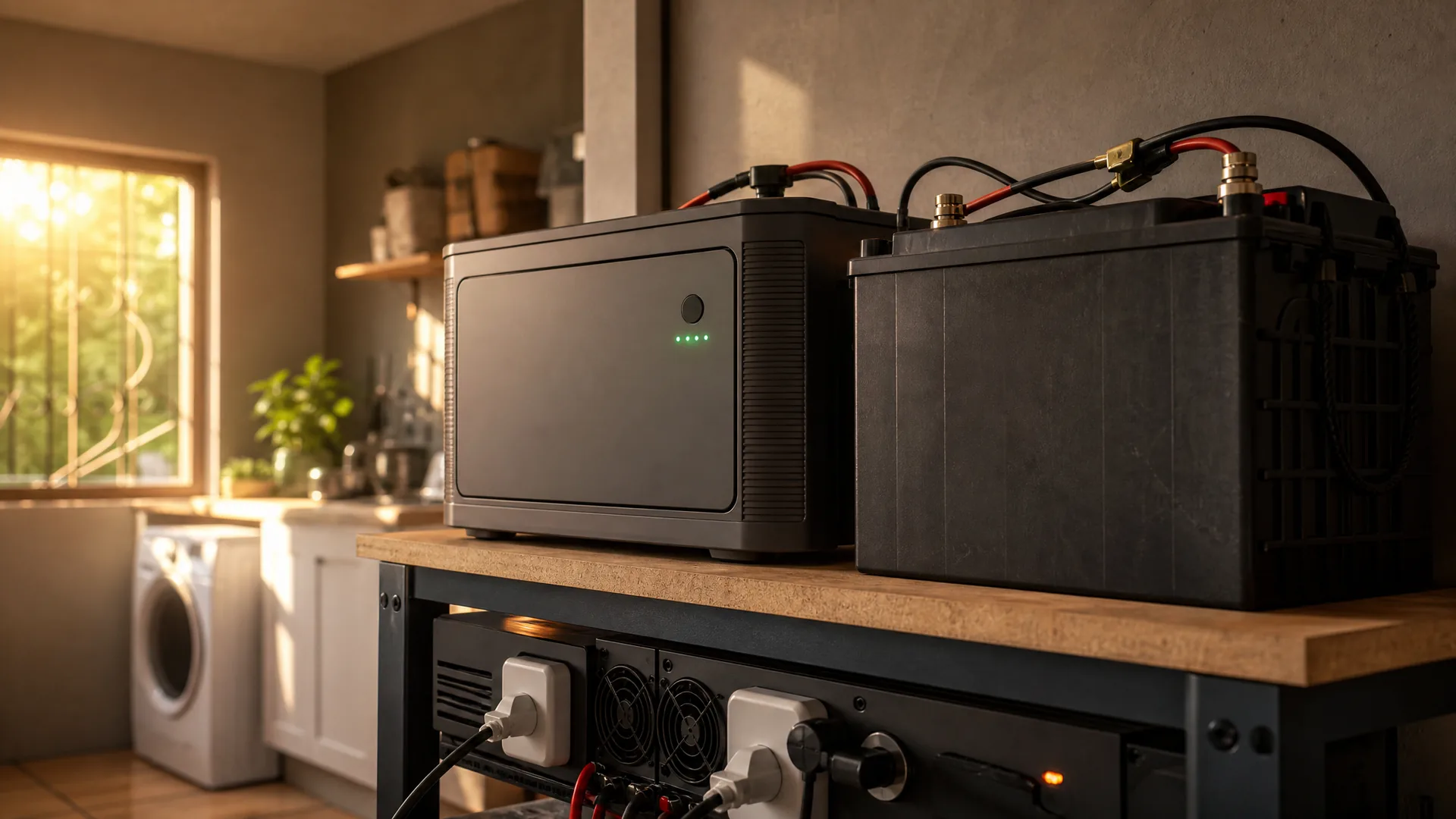
Lithium Vs Lead Acid Backup Power: SA Load-Shedding
South Africa’s load-shedding reality has turned backup power from a convenience into a daily essential. When your battery bank is cycling multiple times a day, every day, the technology inside that battery matters far more than it would somewhere outages are rare. The lithium battery vs lead acid backup power debate is especially consequential here, because the wrong choice costs you money, reliability, and peace of mind. This breakdown gives you the numbers and reasoning you need to decide.
Why Your Battery Choice Matters During Load Shedding
Most countries treat backup batteries as standby equipment, cycled occasionally during storms or grid faults. South African homeowners don’t have that luxury. During sustained load-shedding periods, a typical household on daily Stage 4 schedules may cycle its battery bank two to four times per day. That’s a punishing usage pattern that exposes the weak points of any battery chemistry quickly.
The battery you choose determines how much usable power you actually get, how long the unit lasts, and how much you’ll spend over the next five years. For load-shedding backup power solutions for South African homes, getting the battery chemistry right is the foundation everything else rests on.
Lithium Battery vs Lead Acid: Core Technical Specs Compared
Before comparing costs and lifespan, you need to understand what you’re actually buying at the same amp-hour rating. A 200 Ah lithium battery and a 200 Ah lead acid battery are not equivalent products, not in usable capacity, and not in how they behave under load.
Depth of Discharge and Usable Capacity
Lead acid batteries, whether flooded or sealed (AGM/gel), should not be discharged below 50% of their rated capacity without significantly shortening their lifespan. A 200 Ah lead acid unit delivers roughly 100 Ah of usable energy in practice.
A LiFePO4 lithium battery can safely discharge to 80–100% of rated capacity. That same 200 Ah lithium pack gives you 160–200 Ah of real, usable energy. To match the usable output of one lithium unit, you’d need to buy double the lead acid capacity, which changes the cost comparison immediately.
Lithium batteries are also significantly lighter and physically smaller for equivalent usable capacity. That matters for installation space and wall-mounted cabinet systems common in South African solar setups.
Charge Speed and Efficiency
Lead acid batteries charge slowly and cannot accept a full charge current right to the end of the cycle, the absorption phase drags. Lithium batteries accept higher charge rates throughout most of the cycle, so they recover faster between load-shedding slots. When you have only a two-hour window of available grid or solar energy before the next outage, charge speed is a practical constraint, not a spec-sheet detail.
Lead Acid Battery Lifespan vs LiFePO4 Longevity
Cycle life is where the two technologies diverge most sharply, and it’s directly relevant to South African conditions.
LiFePO4 batteries commonly support 3,000 to 6,000 full charge-discharge cycles before dropping to 80% of original capacity. A sealed lead acid (VRLA) or flooded lead acid unit typically rates for 300–500 cycles under comparable depth-of-discharge conditions.
Run the numbers against a real load-shedding pattern. A home cycling its battery twice a day hits 700 cycles in a single year. A lead acid battery rated for 400 cycles at 50% DoD is already beyond its rated life. The capacity drop is gradual, but by month eight to twelve you’ll notice shorter backup runtimes, and by year two, the bank may need replacing.
LiFePO4 at the same cycling rate reaches 3,000 cycles in roughly four years. At lower cycling rates, the same battery could last eight to twelve years. That’s not a marginal difference. It’s a fundamental shift in how you budget for backup power.
Frequent load shedding accelerates lead acid degradation through a second mechanism: partial state-of-charge cycling. If the battery never reaches a full charge between outages, sulfation builds up on lead acid plates and permanently reduces capacity. LiFePO4 chemistry doesn’t suffer from sulfation.
LiFePO4 Battery Cost in South Africa: Upfront Price vs Long-Term Value
LiFePO4 battery cost in South Africa is higher upfront, that’s the honest starting point. A quality lithium battery system sized for a typical suburban home costs meaningfully more at point of purchase than an equivalent lead acid bank. For budget-constrained households, that gap is real and shouldn’t be dismissed.
But upfront price and total cost are two different numbers.
Total Cost of Ownership Over 5 Years
A homeowner running lead acid under heavy load-shedding cycling may need to replace the battery bank every two to three years. Over a five-year window, that’s potentially two replacement purchases plus installation labour each time, battery swaps aren’t DIY-friendly and require a qualified electrician.
A single LiFePO4 purchase, properly sized, should cover the same five-year period without replacement. The crossover point, where lithium’s total cost drops below the cumulative lead acid spend, typically arrives in year two or three, depending on cycling intensity and the specific products chosen.
There’s a maintenance dimension too. Flooded lead acid batteries require periodic water top-ups and terminal cleaning. AGM batteries are sealed but still degrade faster under heat and deep cycling. LiFePO4 units are effectively maintenance-free and include built-in Battery Management Systems (BMS) that protect against overcharge, over-discharge, and thermal runaway.
For homeowners pairing batteries with solar, the efficiency advantage (covered below) adds another layer of long-term savings on top of the replacement cost equation. Solar battery backup systems in South Africa almost universally recommend lithium chemistry for this reason.
Battery Efficiency Comparison: Which Technology Wastes Less Energy?
Round-trip energy efficiency measures how much of the energy you put into a battery you actually get back out. The gap between the two technologies is substantial.
LiFePO4 batteries achieve round-trip efficiency of around 95–98%. Flooded and sealed lead acid batteries typically operate at 70–85% efficiency. For every 100 kWh of solar harvest or grid energy you store in a lead acid bank, you recover only 70–85 kWh. A lithium bank returns 95–98 kWh from the same input.
In practical terms: lead acid wastes 15–30% of every charging cycle as heat. With Eskom tariffs having risen sharply and continuing to climb into 2026, wasting a quarter of your stored energy every single cycle is an ongoing cost that doesn’t appear on a battery spec sheet but shows up on your electricity bill.
For systems tied to solar panels, this efficiency gap means a lead acid setup effectively requires more solar panel capacity to deliver the same usable output. The battery efficiency comparison affects your inverter sizing and panel count, not just the battery line item. See how this connects to choosing the best solar inverter for home use in South Africa, inverter and battery efficiency stack together to determine your real system output.
Which Backup Battery Technology Is Right for Your SA Home or Business?
Neither technology is universally wrong. The right answer depends on your specific situation.
Lead acid may suit you if:
- Your budget is strictly limited and load shedding in your area is light or irregular
- The backup system is for occasional, low-cycling use (a holiday home, for example)
- You’re bridging a short period while saving for a full lithium system
- You’re comparing against a generator vs inverter battery backup comparison and the load cycles are infrequent
LiFePO4 is the stronger choice if:
- Your home cycles its battery daily, which describes most South African suburbs
- You’ve paired or plan to pair the system with residential solar panel installation
- You want a five-year-plus solution without replacement costs
- Your load includes sensitive equipment like medical devices, home office servers, or fridges that need consistent runtime
For businesses, the calculus almost always favours lithium. Downtime costs money, and lead acid’s shorter cycle life under daily use makes it an unreliable commercial solution.
The critical variable most homeowners underestimate is cycling frequency. Households that experienced Stage 4 or Stage 6 load shedding regularly through 2023–2025 know exactly what daily cycling looks like. If that pattern persists into 2027, or grid instability continues, lead acid’s cycle-life limitations will cost you within the first year.
Get a professional assessment before you buy. Battery sizing depends on your actual load profile, the number of circuits you want backed up, your available solar input, and your inverter specifications. Buying the wrong battery, in either direction, wastes money.
Electricians Near Me offers a FREE CALL-OUT FEE assessment where a qualified electrician reviews your home’s load requirements and recommends the right battery chemistry, capacity, and inverter pairing for your budget. No pressure, no guesswork, just a practical recommendation based on your actual situation. Book your free assessment today and get a backup power setup that will still be working reliably in five years.

About author





Add comment