
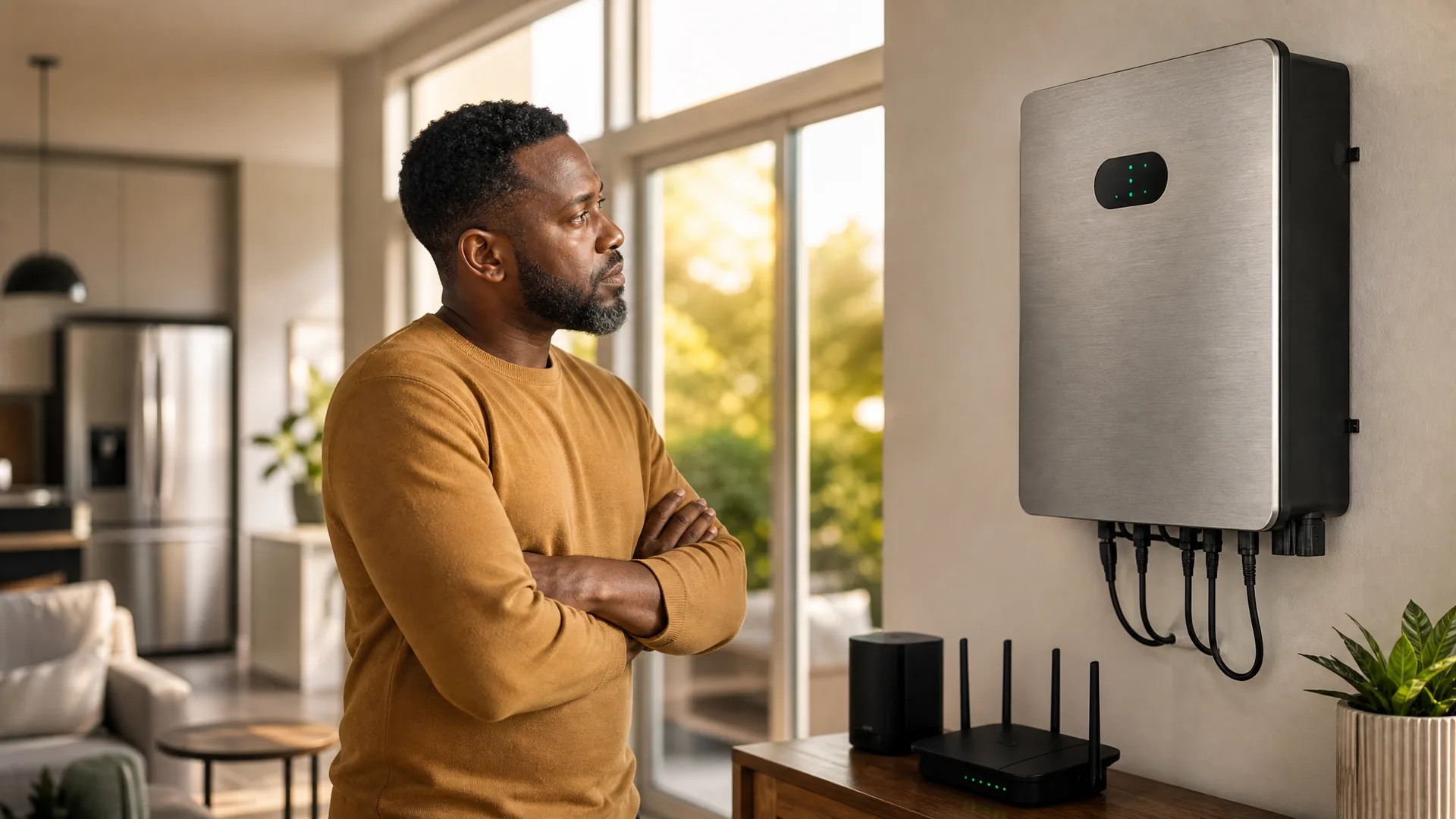
Best Solar Inverter for Home Use South Africa: 2026 Guide
Choosing the best solar inverter for home use in South Africa is one of the most important decisions in any solar or backup power project. Get it right, and you have a reliable system that carries your essential loads through load shedding without a second thought. Get it wrong, wrong type, wrong size, wrong budget tier, and you either trip breakers during a power cut or pay for capacity you never use. This guide cuts through the noise with a plain comparison of inverter types, an honest look at the leading solar inverter brands in South Africa, and a practical sizing method so you can have an informed conversation with your installer.
Why Choosing the Right Solar Inverter Matters for South African Homes
Load shedding remains a daily reality in 2026. South Africa has consistently ranked among Africa’s fastest-growing rooftop solar markets through 2024 and into 2026, driven almost entirely by the need for reliable backup power at home. The inverter sits at the heart of every solar and battery system, it converts DC power from solar panels or batteries into the AC power your appliances use.
A poor inverter choice has real consequences. An undersized unit trips under load when the fridge compressor kicks in alongside your TV and router. An oversized one costs more upfront and may sit underused for years. Picking the wrong inverter type, say, a grid-tied string inverter when you actually need backup power, means your lights still go off during load shedding. Getting this decision right from the start saves money, frustration, and repeat installation costs. For broader context on load shedding backup power solutions for South African homes, it helps to understand how the inverter fits into the wider system before you buy.
Three Inverter Types Explained: String, Hybrid, and Off-Grid
String Inverters: Grid-Tied and Cost-Effective
A string inverter connects a series (“string”) of solar panels to the grid. It converts solar energy into usable AC power and feeds it into your home, reducing your grid consumption during daylight hours. Because the design is straightforward, string inverters are the most affordable inverter type available.
The key trade-off: they offer no backup power. When the grid goes down, including during load shedding, a standard string inverter shuts off by law for safety reasons. This makes them unsuitable for any home where backup power is the primary goal. They suit homes on stable, reliable grid supply that simply want to lower their electricity bill, which is rare in South Africa right now.
Hybrid Solar Inverters: The Best of Both Worlds
A hybrid solar inverter combines solar generation, battery storage, and grid connection in a single unit. It charges batteries from solar panels during the day, draws from the battery when the grid fails, and can export surplus power when regulations allow. This makes it the go-to choice for load-shedding resilience in South African homes.
Hybrid solar inverter cost is higher than a comparable string inverter, sometimes significantly so, because of the added battery management circuitry and inverter-charger functionality. Hybrids have become more price-competitive through 2025 and into 2026 as global supply chains normalised and local distributor competition increased. For most homeowners weighing solar and backup power together, the hybrid is the practical choice.
Off-Grid Inverters: Full Independence from Eskom
An off-grid inverter (often called an inverter-charger) is designed to operate entirely without a grid connection. It runs from batteries charged by solar panels or a generator, with no reliance on Eskom at all. These systems require larger battery banks and more solar capacity, so total system cost is the highest of the three types.
They suit farms, smallholdings, homes in areas with extremely poor grid infrastructure, or households that have made a deliberate decision to disconnect entirely. For most suburban South African homes still connected to a municipal supply, a hybrid system delivers better value.
Top Solar Inverter Brands in South Africa (2026)
The solar inverter market in South Africa has matured considerably. A handful of brands now dominate residential installations, with clear differences in reliability, local support, and warranty terms.
Premium Tier: Victron Energy and SolarEdge
Victron Energy’s MultiPlus and MultiPlus-II ranges are benchmarks for hybrid and off-grid installations. Victron has a well-established distributor and installer network in South Africa, which means warranty claims and technical support are handled locally rather than routed overseas. Installers prize it for its flexibility, compatibility with a wide range of battery chemistries, and a long track record in demanding environments. The trade-off is a higher upfront price.
SolarEdge is well regarded for residential string and hybrid systems, particularly where module-level monitoring is a priority. Its optimiser-based architecture means shade on one panel doesn’t drag down the whole string, useful for homes with complex roof orientations.
Mid-Range Favourites: Sunsynk, Deye, and Voltronic
Sunsynk and Deye hybrid inverters have become two of the most widely installed solar inverter brands in South Africa, valued for their local distributor networks and lithium battery compatibility. Both offer strong feature sets at a price point below the premium tier, hybrid functionality, wide input voltage ranges, and good compatibility with popular lithium battery packs. Warranty support through local distributors has improved considerably over recent years.
Voltronic-based inverters (sold under brands including Axpert and Mecer) have been staples of the South African market for years. They are widely supported by local technicians, and a large installed base means spare parts and firmware expertise are accessible. They suit budget-conscious buyers who still want a proven inverter-charger platform.
Budget-Conscious Options Worth Considering
Several Chinese-manufactured brands now enter the South African market at entry-level price points. Quality varies. The key considerations are local warranty support, whether a South African distributor holds stock, and whether the brand is compatible with popular battery brands. A cheap inverter from a brand with no local after-sales support can cost more in the long run than a mid-tier unit from a well-represented supplier.
Always confirm with your installer that your chosen brand carries at least a two-year local warranty and that spares are available in-country.
How to Calculate the Right Inverter Size for Your Home
Sizing your inverter correctly prevents the two most common mistakes: a unit that trips under load and one that’s wastefully oversized. An inverter size calculator approach starts with a simple load assessment.
Follow these steps:
- List your essential appliances, the ones you need running during load shedding. Typical examples: fridge, lights, TV, router, laptop, phone chargers, and possibly a microwave.
- Note the wattage of each, check the label or manual on each appliance. Add these up to get your continuous load in watts.
- Account for startup surge, fridges, pumps, and air conditioners draw two to three times their running wattage for a fraction of a second on startup. Your inverter’s rated capacity must handle this surge without tripping.
- Convert to kVA, inverters are rated in kilowatts (kW) or kilovolt-amperes (kVA). Divide your total watt load by the inverter’s power factor (commonly 0.8) to confirm the kVA requirement.
- Add a safety margin, 20–25% headroom above your calculated load is standard practice.
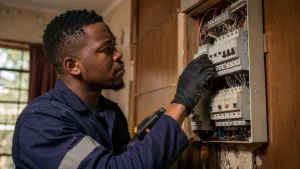
As electrical installers who size and fit inverter systems for South African homes daily, we find that most homeowners underestimate startup surge from fridges and pool pumps, these are the appliances most likely to trip an undersized inverter. A professional load assessment removes the guesswork entirely. Before any inverter installation, a residential electrical inspection of your DB board and existing wiring is a sensible first step.
Best Inverter for Load Shedding: What to Look For
Not all hybrid inverters perform equally when the grid drops. These two factors separate the genuinely load-shedding-ready units from the rest.
Switchover Speed and UPS Functionality
Switchover time is how long the inverter takes to move from grid power to battery power when load shedding hits. A switchover under 20 milliseconds is widely considered the minimum standard for protecting sensitive electronics, smart TVs, laptops, fibre routers, and medical equipment can all lose data or reset if the break is too long. The best inverter for load shedding will specify its switchover time clearly; look for “UPS-grade” or “< 20 ms” in the datasheet.
Battery Compatibility and Depth of Discharge
The inverter and battery must work well together. Most modern hybrid inverters in South Africa support lithium iron phosphate (LiFePO4) batteries, which offer a usable depth of discharge of around 80–90% and longer cycle life than lead-acid alternatives. Check that your chosen inverter supports the specific battery communication protocol (BMS integration) your battery requires, a mismatch can limit performance and void warranties on both units. For a fuller breakdown of battery options, the solar battery backup system guide covers the key considerations alongside inverter compatibility.
Budget Tiers: What You Can Expect to Pay in 2026
Solar inverter pricing in South Africa sits across three broad tiers, and the right one depends on your load, your goals, and your roof.
Entry-level systems use a basic inverter-charger with lead-acid or entry-tier lithium batteries. They suit a limited load, lights, a router, and phone charging, and are the lowest-cost entry point for backup power. The trade-off is shorter battery lifespan and limited solar integration.
Mid-range hybrid systems are where most South African homeowners land in 2026. A quality hybrid inverter paired with a lithium battery pack covers a typical household’s essential load through a standard two-to-four-hour load-shedding slot, with the option to grow the system later. Hybrid solar inverter costs at this tier have become more accessible as supply normalised through 2025 and local competition increased into 2026.
Premium whole-home systems use high-capacity hybrid or off-grid inverters, larger battery banks, and enough solar panels to cover the bulk of daily consumption, not just backup. These systems make economic sense for high-consumption homes, homes with pool pumps or air conditioning, or anyone targeting near-grid-independence. The upfront cost is the highest, but the return on investment is strongest for high electricity users.
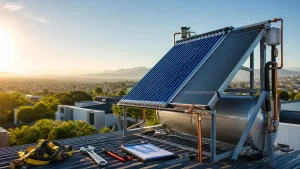
Whatever your budget, a proper installer assessment prevents overspending on capacity you don’t need, and prevents underspending on capacity you’ll regret missing. If you’re also exploring related upgrades, solar geyser installation costs in South Africa is worth reviewing alongside your inverter budget planning.
Ready to choose the right inverter for your home? Book a FREE load assessment and inverter sizing consultation with Electricians Near Me. There’s no call-out fee, and all work is backed by our professional workmanship guarantee. Call us or book online, don’t buy an inverter before you know exactly what your home needs.
About author


Add comment