
Industrial electrical repairs
Fault tracing and repairs for tripping circuits, damaged wiring, burnt breakers, isolator faults, loose terminations, DB board problems and equipment supply failures.
Need an industrial electrician for a workshop, warehouse, factory, production area, light industrial unit or facility? Our electricians assist with industrial electrical repairs, electrical installations, electrical upgrades, 3-phase DB boards, circuit breakers, isolators, machinery supplies, industrial wiring, lighting, generators, solar AC protection boxes and planned electrical maintenance.
Industrial electrical work must be practical, safe and planned around your operation. When a breaker trips, a 3-phase circuit fails, equipment loses power, an isolator burns, a DB board overheats or a generator and solar system needs correct AC protection, you need electricians who can trace the problem clearly and help you reduce downtime.
Industrial electrical systems are expected to do far more than switch on lights and supply ordinary plug points. A factory, production facility, engineering workshop or warehouse may depend on three-phase distribution, machinery circuits, motors, pumps, compressors, high-bay lighting, local isolators, industrial socket outlets and distribution boards that carry substantial electrical loads for long operating periods. When one part of that electrical system develops a fault, the result can affect equipment, staff, production and the ability of the business to operate normally.
Voltana provides industrial electrician services in Gauteng for factories, warehouses, workshops, engineering businesses, manufacturing facilities, production areas, industrial parks, processing facilities, agricultural operations and other properties where the electrical installation supports demanding equipment or continuous business operations. Our industrial electricians assist with electrical fault finding, industrial electrical repairs, new electrical circuits, DB board work, wiring, lighting, machinery supplies, pump and compressor circuits, electrical maintenance and practical upgrades to existing power distribution.
An industrial electrician should understand that the visible electrical fault is not always the cause of the problem. A breaker that trips when a compressor starts may be reacting to the equipment, the starting demand, an overloaded circuit, damaged wiring, a poor termination or unsuitable circuit protection. A DB board that becomes hot may have a loose electrical connection, excessive demand or a damaged component. A machine that suddenly loses power may have a fault in the electrical supply before the fault is ever found inside the machine itself. Good industrial electrical work starts by understanding the site, the circuit and the way the equipment is being used.
Our electricians approach industrial electrical problems as complete electrical systems. We consider the distribution board, circuit protection, cable route, conductor size, electrical connections, local isolation, earthing and the equipment connected to the circuit. Where several machines operate together, we also consider how the combined load affects the electrical distribution. This wider approach is especially important on older industrial properties that have expanded over many years, because the electrical installation may no longer match the equipment, production layout or electrical demand of the business today.
Detailed fault finding and repairs for tripping circuits, damaged wiring, hot breakers, failed equipment supplies, DB board faults and electrical connections that are interrupting industrial operations.
New machinery supplies, dedicated circuits, isolators, industrial plug points, lighting circuits, cable routes and distribution work planned around the electrical requirements of the site.
Practical maintenance and corrective electrical work for high-use circuits, distribution boards, heavily loaded electrical points and recurring faults that should be investigated before a larger failure develops.
Electrical support for three-phase distribution, machinery power circuits, pumps, compressors, motors and industrial equipment where the supply side must be checked and correctly protected.
Industrial electrical work should be planned around the actual load, equipment and operating environment of the property. Our electricians focus on understanding how the electrical system is being used before deciding whether the correct solution is a repair, a new circuit, improved distribution or a larger electrical upgrade.
Industrial electrical repairs are often required after a fault has already started affecting production or equipment. A breaker may trip repeatedly, machinery may lose power, lights may fail in one section of a warehouse or an isolator may become damaged. Our industrial electricians investigate the affected electrical circuit and the components supplying it so the repair can be based on the cause of the fault rather than the most obvious failed part.
Where a burnt breaker, damaged terminal or melted socket is found, the electrical connection, wiring and circuit load should also be considered. Replacing a damaged component without understanding why it overheated can leave the underlying electrical problem in place. Our aim is to identify the practical electrical issue, explain what has been found and complete or quote the repairs required to restore a safer and more reliable supply.
New machinery, workshop equipment and changing production layouts often require new electrical circuits. Our electricians assist with dedicated equipment supplies, local isolators, industrial plug points, new wiring, lighting circuits, DB board additions and electrical connections. The installation should be planned around the electrical rating of the equipment, the existing distribution system and the route between the DB board and the point where power is required.
Industrial electrical installations should not be treated as an extension cord from the nearest available socket. Heavy equipment can place considerable demand on a circuit, and the protective device, cable and isolator must suit the intended application. Where the existing DB board has limited capacity or the site has already undergone several additions, the wider distribution arrangement may need to be assessed before another machine is connected.
Industrial properties often grow faster than their electrical systems. A workshop may begin with a few machines and gradually add compressors, welders and larger equipment. A factory may extend a production line or change the way machinery is arranged. A warehouse may add charging equipment, roller-door supplies, office areas and additional lighting. The original electrical distribution can eventually become poorly matched to the way the site now uses power.
Our industrial electricians can assist with additional circuits, improved circuit separation, DB board upgrades, sub-distribution, industrial plug points, lighting improvements and other electrical work required to support expansion. A good upgrade should solve the immediate requirement while also considering maintenance access, circuit identification and the possibility that the business will continue to grow.
Industrial equipment and electrical systems can operate for long hours in environments where dust, vibration, moisture and heat place additional stress on electrical components. Connections can deteriorate, plugs can become damaged, breakers can begin operating unusually warm and wiring can suffer physical damage. Planned industrial electrical maintenance gives the business an opportunity to investigate visible warning signs before they become a major interruption.
Maintenance does not mean blindly replacing parts according to a calendar. It means paying attention to the electrical points that carry demanding loads, the faults that keep returning and the condition of distribution equipment. Our electricians can inspect electrical issues, complete practical maintenance repairs and recommend further work where an electrical problem requires a larger corrective solution.
Fault finding becomes essential when an industrial electrical problem is intermittent or only appears under specific operating conditions. A circuit may remain stable until a machine starts. Earth leakage may trip after rain. A motor supply may fail only after the equipment has operated for a period. One section of a three-phase installation may lose power while lighting and office circuits remain active elsewhere on the property.
Our industrial electricians work through the fault pattern and the electrical supply methodically. The affected equipment, breaker, DB board, isolator, cabling and connections can be considered as part of the investigation. Correct fault finding can prevent unnecessary component replacement and helps separate a property electrical fault from an internal machinery problem that may need the equipment manufacturer or a specialist technician.
Industrial electrical installations can develop unsafe additions when a property has been modified by several tenants, contractors or maintenance teams over time. Exposed wiring, damaged enclosures, poorly labelled circuits, unsuitable electrical points and heat-damaged components should not become accepted simply because the equipment still operates. Our industrial electricians can identify electrical defects and assist with practical repairs or corrective work on the fixed electrical installation.
Where electrical COC or compliance-related work is required, the installation must be assessed according to the relevant electrical requirements and the actual scope of the property. We do not treat compliance as a sticker on a DB board. Defects must be identified and corrected before the appropriate certification process can be completed by the responsible registered person.
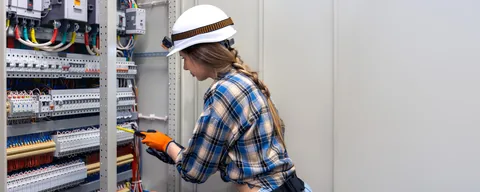
Industrial distribution boards and switchgear may supply machinery, motors, production lines, pumps, compressors, high-bay lighting and other heavy electrical loads. When a panel runs hot, trips repeatedly or loses one section of supply, the fault should be traced through the breaker, protection device, cable, termination and connected load.
Our industrial electricians assist with three-phase DB board faults, circuit breaker concerns, isolators, loose electrical connections, heat-damaged components, circuit identification and distribution upgrades. New machinery or additional production equipment may also require the existing panel capacity and circuit arrangement to be assessed before new electrical circuits are added.
The industrial DB board is the point where the electrical supply is divided between machinery, lighting, pumps, compressors, plug circuits and other equipment. When the distribution board is poorly organised, overloaded or damaged, electrical faults can appear in several different areas of the business and become difficult to diagnose.
Our industrial electricians assist with DB board fault finding, damaged circuit breakers, loose electrical connections, burnt terminals, isolator problems, earth leakage faults, circuit identification and electrical upgrades. Where a business has added equipment over time, the DB board may also need to be assessed for spare capacity and circuit distribution before additional electrical loads are connected.
A breaker that has visibly burnt should never be treated as an isolated cosmetic problem. Heat damage can develop when an electrical connection becomes loose and resistance increases at the termination. It can also occur where a circuit is overloaded or where a component has deteriorated. Replacing the breaker without considering the cable, connection and electrical load may result in the same area becoming hot again.
Heat inside an industrial DB board can develop for several reasons, and the location of the heat often helps the electrician understand where to investigate. A loose terminal can create resistance at a connection. A heavily loaded circuit can place sustained demand on a breaker and conductor. A damaged busbar connection or deteriorated component can also contribute to abnormal temperatures. The answer is not automatically to install a larger breaker, because increasing the protection rating without confirming the cable and load can create a more serious electrical risk.
Our industrial electricians look at the affected circuit in context. We consider what equipment is connected, when the heat appears, whether the circuit trips, the condition of the wiring and the electrical connections. Where the board has been altered several times, circuit identification and the general distribution arrangement may also need attention. A properly labelled and understandable DB board is easier to maintain, isolate and fault find when production equipment develops a problem.
A burnt circuit breaker is often the evidence left behind by an electrical fault rather than the complete fault itself. If the damaged breaker is removed and replaced without checking the termination, conductor and connected load, the new breaker may eventually suffer the same damage. The electrician should determine whether the problem originated from a poor connection, excessive electrical demand, unsuitable circuit design, component failure or another electrical condition.
This is particularly important in factories and workshops where equipment may run for long shifts. A connection that is only slightly loose can produce heat over time. The equipment may continue operating until the terminal, cable insulation or breaker shows visible damage. Early investigation of unusual heat, buzzing sounds or a burning smell around an industrial DB board can help prevent the fault from progressing into a more disruptive failure.
Industrial electrical faults often appear only when a specific machine operates, the electrical load increases or environmental conditions change. That is why fault finding should begin with the behaviour of the electrical system and not with a box of replacement breakers.
Some machinery, motors and compressors can place a higher demand on the electrical supply during starting. If a breaker trips at the moment the equipment starts, our industrial electricians can investigate the supply circuit, protection, cable, connections and existing load. The fault may be related to the circuit or equipment, and fitting a larger breaker without testing is not an acceptable shortcut.
Heat around a breaker, isolator or terminal can indicate a poor electrical connection, sustained high load or a damaged component. Our electricians can inspect the affected distribution equipment and the circuit it supplies. A hot DB board should be investigated before insulation, terminals or protective devices suffer more extensive damage.
A partial power failure can point to a local circuit, sub-distribution board, isolator, cable or phase-related supply problem. Because the rest of the property remains powered, the fault can easily be mistaken for a machine failure. We can trace the electrical supply to the affected area and help establish where power is being lost.
Intermittent electrical faults can be caused by damaged wiring, loose electrical connections, heat-related deterioration or a supply problem that only appears under load. Our industrial electricians investigate the pattern of the fault and the fixed electrical supply. Where testing points to an internal machinery fault, the customer can then involve the appropriate equipment specialist with clearer information.
Earth leakage faults can be difficult to trace when several circuits or pieces of equipment are involved. Moisture, damaged wiring, deteriorated equipment and circuit faults can all contribute. An industrial electrician can isolate and test the electrical system methodically so the affected area can be narrowed down instead of repeatedly resetting the earth leakage device.
Outdoor circuits, pumps, equipment connections and industrial electrical points can be affected by moisture where enclosures, glands or wiring have been damaged. If a fault consistently follows rain or cleaning, the environment becomes an important part of the investigation. The affected circuit should be inspected rather than treated as random nuisance tripping.
Industrial machinery should receive power from an electrical circuit that suits the requirements of the equipment and the electrical distribution available on the site. When a machine is connected to an unsuitable or already heavily loaded circuit, the result can be repeated tripping, overheating, unreliable operation and difficult fault finding.
Our industrial electricians assist with dedicated machinery circuits, cable routes, circuit protection, local isolators, equipment connection points and DB board circuit additions. Before planning a new supply, the electrical rating of the machine and the existing installation should be considered. The fact that a spare breaker space is available does not automatically mean that the electrical system can support any new machine. The supply capacity, distribution arrangement and intended equipment load all matter.
Dedicated circuits can make industrial electrical systems easier to manage because heavy equipment is separated from general plug and lighting circuits. When a machine develops a fault or requires maintenance, the circuit can be identified and isolated more clearly. Dedicated circuits also reduce the chance that a high-demand machine shares a supply with smaller equipment that should not be affected every time the machine starts or operates under load.
Our role is to work on the electrical installation and supply side of the equipment. We can inspect whether electrical power reaches the machine, investigate the circuit, wiring, breaker, isolator and electrical connections and identify supply-side faults where possible. Industrial machinery can also contain specialist control systems, drives, electronics and internal mechanical components. Where the problem is inside specialised equipment, a machine technician, OEM service provider or other relevant specialist may still be required. Being honest about that boundary helps the customer send the correct technician to the correct problem.
Adding machinery to a factory or workshop is not only a matter of running a cable from the DB board. The electrician needs to understand what the equipment requires and how that requirement fits into the existing electrical installation. Equipment specifications, supply type and operating demand should be reviewed. The circuit protection must suit the circuit, the cable must be selected for the intended application and the electrical route should be practical for the industrial environment.
The operating environment matters as well. Cables and electrical points in workshops can be exposed to physical impact, dust, oil, heat and equipment movement. Warehouses may require long cable routes at height. Factories may need circuits routed around production equipment or areas that are difficult to shut down. Good planning allows the electrical installation to support the machinery without creating unnecessary obstacles for maintenance and daily operations.
Electric motors are used throughout industrial properties to drive pumps, compressors, fans, conveyors, extraction systems and production equipment. When a motor does not start or trips the electrical supply, the visible problem may be at the motor while the electrical fault is somewhere in the supply circuit feeding it.
Our industrial electricians can investigate the fixed electrical supply to motors and motor-driven equipment. This may include the breaker or protective device, the circuit wiring, electrical connections, local isolator and the availability of the required supply at the equipment connection. In three-phase installations, a supply problem affecting a phase or a poor electrical connection can also create abnormal equipment behaviour and should be checked before conclusions are made about the internal condition of the motor.
A motor that trips a breaker during starting should be investigated carefully. The electrician needs to consider when the trip occurs, whether the problem is new, what other equipment is operating and whether there are signs of heat or damaged electrical connections. Depending on the equipment, the starting characteristics can place a different demand on the circuit than normal running operation. The protection and wiring must suit the intended circuit, but the possibility of an internal motor or driven-equipment problem also needs to remain open.
Where the electrical supply is correct and testing indicates that the fault is internal to the motor, specialist motor repair or rewinding services may be required. Our electricians focus on establishing the electrical condition of the supply side and completing fixed electrical repairs within the installation. This practical separation prevents customers from paying for random electrical changes when the machine itself needs specialist attention, or sending a motor away for repair when the actual problem is a damaged supply circuit.
Industrial and commercial pumps can support water movement, processing, pressure systems, circulation, drainage and other essential operations. A pump that suddenly loses electrical power can stop the entire system it serves, which is why the electrical supply should be checked methodically when the cause is not immediately clear.
Our industrial electricians assist with pump power circuit checks, breaker fault finding, local isolators, damaged wiring, electrical connections, earth leakage faults and new pump circuits. The electrician can trace the electrical supply from the distribution point towards the pump and establish whether power is being interrupted by the protective device, wiring, isolation point or electrical connection. Where the electrical supply is present and the problem lies inside the pump or its specialist control equipment, the appropriate pump technician may then be required.
Moisture is an important consideration on many pump circuits. Pumps are often located outdoors, near water systems or in areas where electrical enclosures and cables can be exposed to wet conditions. Damaged glands, deteriorated cable insulation or compromised connections can contribute to earth leakage and intermittent faults. If a pump circuit begins tripping after rain, flooding or wash-down work, that fault pattern should be communicated to the electrician because it can help narrow the investigation.
New pump installations should also be supplied from an electrical circuit that suits the equipment and the site. The distance from the DB board, cable route, electrical load, circuit protection and isolation arrangement all need to be considered. A pump should not simply be connected to the nearest available plug circuit because that point happens to be physically close to the equipment.
Air compressors are common in workshops, factories, engineering businesses and manufacturing environments. Depending on the compressor and motor arrangement, starting can place a significant demand on the electrical supply. A compressor that repeatedly trips a breaker should be investigated instead of being treated as a problem that can automatically be solved by fitting a larger circuit breaker.
Our industrial electricians can inspect the compressor supply circuit, breaker, wiring, isolator and electrical connections. We consider the equipment information available, the electrical circuit feeding the compressor and the point at which the trip occurs. If the compressor operated normally for years and has only recently started tripping, the change in behaviour is important. If the fault appeared immediately after new equipment was added to the same electrical distribution, the combined site load may also need to be considered.
Loose electrical connections can create heat and voltage-related problems at the point of connection. Damaged cabling, a deteriorated breaker or an overloaded circuit can also contribute to unreliable compressor operation. On the other hand, the compressor itself may have an internal electrical or mechanical fault. The purpose of proper electrical fault finding is to establish what can be confirmed on the supply side before unnecessary changes are made to the electrical installation.
Where a new compressor is being installed, our electricians can assist with a dedicated circuit, local isolator, cable route and connection planning. The electrical supply should be based on the equipment requirements and the capacity of the existing distribution system. This gives the compressor a more appropriate supply and makes future fault finding and isolation easier.
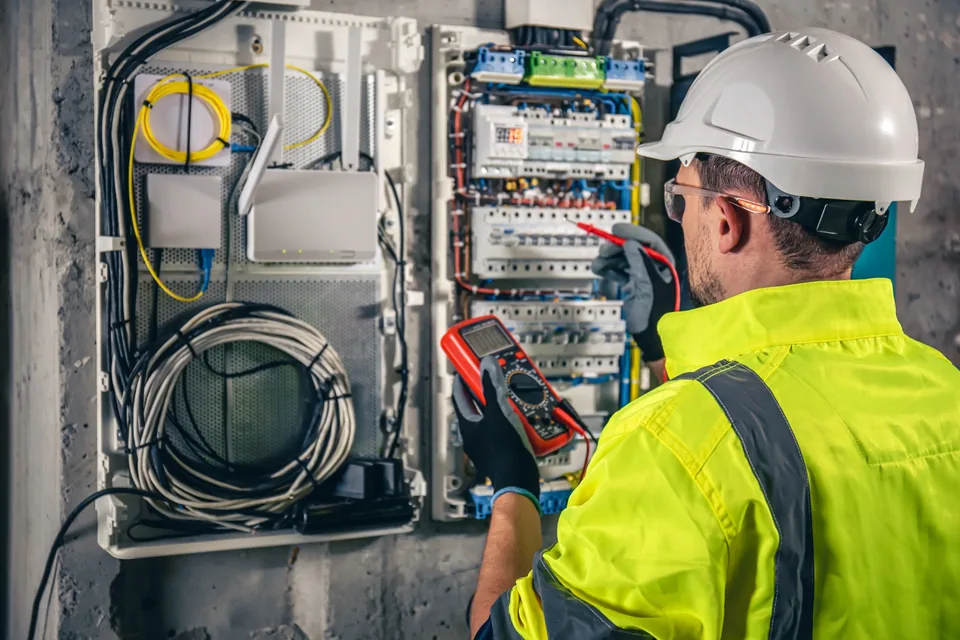
Industrial faults often appear only when machinery starts, a motor reaches load or several pieces of equipment operate together. Repeated tripping can be linked to overload, damaged wiring, poor electrical connections, unsuitable protection, phase-related problems or a fault inside the connected equipment.
We test the fixed electrical supply side, including distribution, breakers, wiring, isolators and electrical connections feeding industrial equipment. This helps separate a building electrical fault from a possible internal machinery problem and gives the customer a clearer repair path before production staff repeatedly reset a circuit or replace components without identifying the cause.
Industrial wiring has to serve the electrical load while surviving the environment in which it is installed. Heat, vibration, dust, moisture, vehicle movement and changing machinery layouts can all place pressure on cables and electrical connection points. Wiring that would remain untouched in an office may be exposed to far more physical risk in a workshop or production area.
Our industrial electricians assist with new circuit wiring, machinery supplies, workshop wiring, warehouse electrical circuits, pump and compressor circuits, lighting wiring, DB board wiring and repairs to damaged electrical cables. The cable route should be planned so that the circuit is practical to maintain and protected from obvious sources of damage where possible.
Damaged industrial wiring can create intermittent faults, earth leakage problems and complete circuit failure. A cable that has been struck, crushed, overheated or repeatedly exposed to movement may not always fail immediately. The electrical problem can appear only when the cable moves, the load increases or moisture reaches the damaged area. Correct fault finding helps identify the affected route and determine whether a local repair or larger cable replacement is required.
When new equipment arrives on site, the electrical installation should be assessed before the machine is permanently connected. The equipment power requirement, location, cable route and isolation method all influence the circuit design. The existing DB board must also be considered, because a new circuit still depends on the capacity and distribution of the electrical system feeding it.
Our industrial electricians can help businesses plan new fixed electrical supplies around the machinery being installed. This may include a dedicated circuit from the DB board, suitable circuit protection, the required wiring route and a local isolation point. Where several pieces of equipment are being added as part of a factory or workshop expansion, it can be more practical to review the broader electrical distribution rather than installing unrelated circuits one by one.
Loose electrical connections create resistance, and resistance can create heat at the termination. In high-use industrial circuits, that heat may continue developing while the equipment appears to operate normally. Warning signs can include a burning smell, discolouration, buzzing, intermittent power or an electrical point that feels warmer than surrounding equipment. These signs should be investigated by an industrial electrician.
Where heat damage is found, the repair should include an assessment of the affected conductor and electrical components. The reason for the failed connection should also be considered. Industrial vibration, poor terminations, repeated high load and damaged equipment can all contribute to electrical deterioration over time.
A workshop electrical system often changes gradually. The business may begin with a few hand tools and small machines, then add a compressor, welder, extraction equipment, larger machinery and more workstations. Years later, the electrical distribution may still reflect the original small workshop even though the equipment and daily electrical demand have changed completely.
Our industrial electricians assist workshops with machinery circuits, compressor supplies, welding equipment circuits, industrial plug points, lighting, DB board upgrades, new wiring, isolators and electrical fault finding. We look at the way equipment is actually used. Two machines that are never operated together create a different demand pattern from a production workshop where several machines run continuously throughout the day.
Repeated breaker tripping in a growing workshop can be a warning that the circuit distribution no longer matches the operation. Extension leads and multi-plugs may have become permanent because there are not enough correctly positioned outlets. Several high-demand tools may share a circuit. A compressor may start while another machine is under load. Instead of repeatedly resetting breakers, the workshop electrical system should be investigated and the load distribution understood.
Workshop lighting also deserves proper attention. Staff working around cutting equipment, machinery and tools need clear lighting over work areas and access routes. Failed fittings, flickering lights and dark sections can become normalised when production is busy, but poor lighting makes the site harder to work in and can hide other maintenance problems. Our electricians can repair industrial lighting circuits and assist with practical LED or high-bay lighting installations where the building and work area require better coverage.
Not every workshop machine should be supplied from an ordinary general-purpose plug circuit. Equipment with a higher electrical demand may require a dedicated supply or a suitable industrial connection point. Our electricians can assess the equipment rating and existing electrical system and assist with fixed power points or dedicated circuits where required.
Burnt workshop sockets should be inspected, not simply replaced and forgotten. The equipment connected to the point, the condition of the wiring and the circuit load may all be relevant. A socket that repeatedly overheats is evidence that the electrical system is not operating normally at that point. Proper investigation can prevent the same problem from returning.
Warehouses combine large open spaces with loading areas, offices, security systems, roller doors and equipment circuits. The electrical requirements can vary significantly from one part of the building to another. High ceilings and long cable routes also make electrical repairs and lighting work more demanding than an ordinary commercial property.
Voltana assists warehouses in Gauteng with high-bay lighting, LED lighting, loading-bay lighting, security lighting, industrial plug points, roller-door electrical supplies, DB board repairs, equipment circuits, electrical fault finding and general industrial maintenance. Where a warehouse layout changes, electrical points and lighting may need to move with the operation rather than leaving staff dependent on temporary extension leads and poorly positioned supplies.
High-bay lighting faults should be assessed as both a lighting and circuit problem. A failed fitting may be the obvious issue, but repeated failures in the same area can also justify checking the lighting circuit, connection points and supply. Because high-bay fittings are difficult to access, good fault finding before equipment is repeatedly replaced can save unnecessary work at height.
Warehouses can also contain office and IT areas that rely on the same broader electrical installation as the industrial space. When a site experiences partial power failures, it is useful to understand which DB board or sub-distribution point supplies each area. Clear circuit identification and practical distribution make maintenance easier and can help reduce the time required to isolate an electrical fault.
Businesses are remarkably good at adapting to electrical problems. Staff move a plug to another outlet, leave one lighting row switched off or use a manual method when a powered roller door loses supply. These workarounds can keep the warehouse moving for a day, but they also allow electrical faults to remain unresolved for months. A dead circuit, tripping breaker or damaged socket should be investigated so the electrical system can return to the way the site needs to operate.
Our industrial electricians can trace the affected circuit and explain whether the repair involves wiring, circuit protection, a local connection or another part of the fixed electrical installation. Where specialist warehouse equipment itself is faulty, we can help establish whether the electrical supply is present before the relevant equipment technician is called.
In a factory, an electrical fault is rarely only an electrical inconvenience. When production equipment loses power, the business can lose output, staff can be left waiting, customer orders can fall behind and delivery schedules can be affected. That is why factory electrical faults should be approached methodically and the cause should be identified as quickly as the site conditions allow.
Our industrial electricians assist factories and production facilities with machinery electrical supplies, electrical fault finding, DB board repairs, distribution upgrades, new circuits, wiring, industrial lighting, isolators and maintenance-related electrical work. We can investigate the fixed electrical supply to equipment and help determine whether a fault is within the site's electrical installation or whether the machinery requires specialist technical support.
Factories also change over time. Production lines are extended, machines are relocated and new equipment is added. Electrical circuits that once served one piece of equipment may later be altered to support a different layout. Without good circuit identification and planned distribution, the electrical system becomes increasingly difficult to maintain. An industrial electrician can help reorganise or upgrade parts of the installation so the electrical infrastructure better matches the current production process.
Where downtime is expensive, planned electrical maintenance becomes more valuable. A loose connection found during an inspection can be far easier to repair than a burnt terminal discovered after a production circuit fails. Recurring nuisance trips, warm breakers and intermittent equipment supplies should be treated as early warning signs that justify investigation.
When a machine stops, pressure is immediately placed on the maintenance team to get it running again. That urgency can lead to breakers being reset repeatedly or electrical components being changed without diagnosis. Our industrial electricians focus on the supply side and the fault pattern. We consider when the equipment stopped, what else was operating, whether the breaker tripped, whether the local isolator has power and whether the fault affects other equipment on the same distribution system.
This information allows the electrician to narrow the electrical investigation. It can also help the customer decide whether an equipment technician is required. The goal is not to claim that every machinery fault is an electrical installation problem. The goal is to establish what the fixed electrical system is doing and solve the electrical fault where one exists.
Industrial lighting needs to support people working around equipment, racking, vehicles and machinery. Poor light coverage can make inspection, maintenance and daily work more difficult, while repeated lighting failures can create dark areas that the business simply learns to avoid. Our industrial electricians assist with industrial lighting repairs and new lighting installations throughout Gauteng.
We work with warehouse lighting, factory lighting, workshop lighting, high-bay fittings, LED lighting, loading-bay lights, outdoor floodlights and security lighting. The correct solution depends on the building height, work area and existing lighting circuit. A warehouse with tall racking needs a different approach from a fabrication workshop where staff require clear light directly over benches and machinery.
When industrial lights repeatedly fail, the fitting is not always the only item that should be considered. The circuit, switching, electrical connection and supply may need to be inspected. Flickering can also be a useful fault symptom. If lights flicker only when a large machine starts, the problem may be related to the wider electrical supply rather than a group of unrelated faulty fittings.
LED upgrades can be useful where older industrial lighting consumes more electricity or requires frequent maintenance. However, a lighting upgrade should still be planned around useful coverage and practical access. Installing bright fittings in the wrong positions can create glare while leaving work areas poorly lit. Our electricians can assist with the electrical installation and circuit work required for an industrial lighting improvement.
Industrial electrical points are used in environments where equipment can draw more power, plugs are connected and disconnected frequently and physical conditions are harder on electrical components. A burnt socket, cracked industrial plug or damaged isolator should be treated as an electrical fault and not simply taped up until the next maintenance shutdown.
Our industrial electricians assist with industrial socket outlets, dedicated equipment points, workshop plug circuits, isolator installations, damaged isolators and electrical connection repairs. The electrical point should suit the equipment being supplied and the circuit feeding it. Where a business has repeatedly damaged or overheated the same point, the electrical load and wiring should be investigated before another socket is installed.
Local isolators are important because industrial equipment often needs to be disconnected from the electrical supply for maintenance or fault finding. A damaged isolator can prevent safe and clear isolation of the equipment. The correct arrangement depends on the machinery and electrical installation, but the basic principle is that the electrical supply should be understandable and manageable by the responsible people working on the site.
Loose electrical connections remain one of the warning signs industrial businesses should take seriously. A connection can continue carrying current while producing heat at the point of resistance. Burning smells, visible discolouration, buzzing or intermittent equipment operation are reasons to stop treating the fault as minor and arrange for an industrial electrician to inspect the electrical point.
Industrial electrical problems often begin as small changes in the way a circuit behaves. A breaker that never tripped starts operating occasionally. One electrical connection becomes warm. A machine loses power for a moment and then returns. A warehouse light flickers for weeks before a complete lighting circuit fails. Preventative electrical maintenance is valuable because it gives these warning signs attention before the business is forced to react during a larger breakdown.
Our industrial electricians can assist with DB board inspections, electrical connection checks, wiring concerns, isolator faults, industrial plug point problems, lighting maintenance and investigation of recurring tripping. The purpose of maintenance is not to promise that equipment will never fail. It is to identify visible electrical deterioration and recurring electrical behaviour that deserves corrective work.
High-use equipment areas deserve particular attention because the electrical circuits operate under regular demand. Factories, workshops and production facilities can place sustained load on breakers, cables and electrical connections. Warehouses with long operating hours may run lighting and equipment circuits for extended periods. In these environments, heat and deterioration can develop gradually and remain unnoticed until a circuit fails.
A maintenance programme should also reflect the actual history of the property. If one DB board has suffered repeated heat damage, that board deserves more attention than an office circuit that has operated without a fault for years. If earth leakage trips repeatedly after rain, the outdoor electrical installation should be investigated. If a compressor circuit has tripped several times, the circuit and equipment supply should not be ignored simply because the breaker resets.
Unexpected downtime is expensive because the electrical fault chooses the worst possible time to appear. Production may be running, staff may be on shift and customer orders may depend on equipment that suddenly loses power. Planned electrical inspections and corrective repairs allow some problems to be addressed at a more practical time and can reduce the likelihood that obvious warning signs develop into a larger electrical failure.
Maintenance is most effective when the site communicates what has been happening. Operators often know that a machine trips once a week, a light circuit flickers during start-up or a breaker smells hot after a long shift. That information is valuable to an industrial electrician because it helps connect the fault to operating conditions. We encourage industrial customers to describe the behaviour of the electrical system rather than only saying that the electricity is faulty.
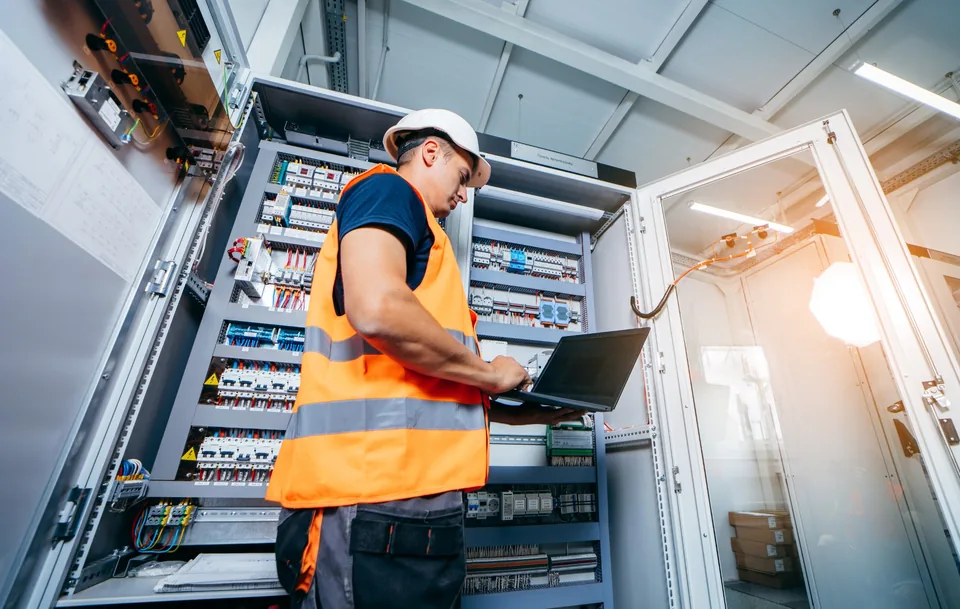
Factories, warehouses and workshops often expand over time. Additional machines, compressors, pumps, generators, solar inverters and production equipment can place new demands on electrical systems that were designed around an older site layout. Planned industrial electrical maintenance helps identify weak points before a recurring fault becomes a larger operational problem.
Industrial maintenance can include DB board checks, switchgear condition reviews, circuit tracing, isolator inspections, wiring condition checks, repeated-trip investigation and assessment of heavily used equipment supplies. Where backup power or solar systems are integrated, the AC protection, essential-load distribution, changeover arrangement and labelling should also make sense for the wider industrial electrical system.
Factories, warehouses and industrial businesses can depend on electricity for far more than convenience. Production equipment, security, IT systems, pumps, lighting and process equipment may all be affected by a grid interruption. Where generators, solar inverters or battery systems are introduced, the electrical integration needs to be planned around the circuits that the business actually expects to support.
Our registered electricians assist with generator electrical connections, changeover arrangements, essential-load distribution, DB board modifications, AC protection and the electrical integration of commercial and industrial solar systems. The backup system should not be treated as a separate box installed next to the building. It becomes part of the electrical distribution and must be considered in relation to isolation, protection and the loads connected to it.
Industrial solar and battery systems can be substantial electrical projects. Inverters, AC protection, isolators, surge protection, distribution boards and load planning all form part of the electrical side of the installation. For larger commercial and industrial projects, Voltana can support solar planning, installation and electrical work depending on the site and project scope.
Generators also require careful consideration of the circuits that should remain powered during an outage. A generator may not be intended to carry every electrical load on a factory or industrial property. Essential-load planning can separate the equipment that genuinely needs backup power from loads that can remain off until the grid returns. This can make the backup arrangement more practical and easier to understand.
Where an existing generator, inverter or solar system has been added to an older electrical installation, our electricians can assist with electrical fault finding and corrective work on the fixed electrical integration. This may include AC protection concerns, DB board wiring, essential-load distribution or other electrical issues identified during inspection. Specialist equipment faults within the generator or inverter itself may still need the manufacturer or approved service agent.
A business can outgrow its electrical installation without moving premises. New machinery is added, production shifts become longer, more equipment operates at the same time and additional staff use the workshop or warehouse. The electrical system that once worked perfectly can begin tripping because the pattern of electrical demand has changed.
Our industrial electricians can assist with electrical upgrades when new equipment or additional circuits are required. We consider the existing DB board, circuit distribution, wiring and the electrical requirements of the new machinery. Depending on the site, the correct solution may be a dedicated circuit, improved circuit separation, a DB board upgrade, sub-distribution or wider electrical work to support the increased load.
Planning before equipment is delivered can prevent frustrating delays. If a machine arrives and the required electrical supply is not available, the business may be tempted to connect it temporarily to whatever circuit is nearby. Temporary electrical arrangements often remain in place much longer than intended. A pre-installation electrical assessment gives the business an opportunity to understand the required supply and complete the electrical work before production depends on the machine.
Future expansion should also be considered realistically. We do not believe every small workshop needs an oversized electrical project, but where a business already has clear plans to add several machines, it makes sense to discuss those plans with the electrician. A slightly broader distribution upgrade may be more practical than repeatedly opening the DB board and installing unrelated circuits as each new machine arrives.
Machine suppliers can provide electrical requirements, but the building must still have an electrical system capable of supplying the equipment. Our industrial electricians can review the available information, inspect the fixed electrical installation and assist with the circuit work required for the connection. The equipment rating, supply type, cable route and distribution board are all part of the planning process.
Where the site has a three-phase supply, the broader distribution should be considered so new equipment does not worsen an existing imbalance or overload problem. The exact electrical solution depends on the installation and the equipment. This is why industrial electrical work should be based on site information and electrical assessment rather than a generic cable and breaker combination copied from another factory.
Industrial rental properties present a particular electrical challenge because the way a tenant uses the building can change completely when the tenancy changes. One tenant may use a warehouse mainly for storage, while the next installs compressors, machinery and workshop equipment. The fixed electrical installation should be assessed against the requirements of the new operation rather than assuming that every industrial tenant uses power in the same way.
Voltana assists industrial landlords and property managers with tenant electrical faults, DB board repairs, lighting, plug points, new circuits, wiring, electrical maintenance and compliance-related corrective work. Where a tenant needs new machinery supplies, the electrical work can be planned in relation to the existing building distribution and the responsibilities agreed between the property owner and tenant.
Clear circuit identification is particularly useful in multi-tenant industrial properties. Shared electrical infrastructure, sub-distribution and previous alterations can make fault finding difficult if circuits are poorly labelled. Our industrial electricians can investigate fixed electrical faults and assist with practical electrical improvements that make the installation easier to understand and maintain.
When a tenant vacates, obvious damaged electrical points and unsafe temporary additions should not simply be left for the next business to discover. Electrical defects can be inspected and repaired so the new tenant starts with a more manageable fixed installation. Where formal electrical certification is required, the appropriate inspection and corrective process should be followed.
Industrial electrical systems often give warning signs before a major circuit failure. The business may continue operating, but the way the electrical system behaves has changed. These changes should be investigated before staff become used to working around the fault.
A circuit that operated reliably and now trips under the same normal workload has changed. The equipment, wiring, electrical connections or protective device may need investigation. Repeatedly resetting the breaker does not explain why the electrical behaviour changed.
Burning smells, visible discolouration and unusual heat around distribution equipment should be treated as urgent warning signs. If it is safe to do so, the affected equipment should not continue operating until the electrical fault has been assessed by a qualified electrician.
Intermittent power loss can involve a loose connection, damaged cable, deteriorating isolator or another supply-side fault. The timing of the failure and any other equipment affected can help the electrician narrow down the circuit problem.
A burnt socket is evidence that something abnormal has occurred at the electrical point. The wiring, connection and equipment load should be considered before a replacement socket is put back into service.
Partial failures can point to a local DB board, sub-distribution circuit, isolator, cable or phase-related fault. Mapping which areas remain powered and which equipment fails provides useful information for industrial electrical fault finding.
If electrical faults begin after new equipment is connected, the wider distribution may need to be assessed. The new machine may have exposed an existing capacity or circuit distribution problem that was not obvious under the previous electrical load.
Some industrial electrical faults cannot be left until a convenient maintenance date. Smoke, sparks, exposed live wiring, a burning distribution board or a complete loss of electrical supply to an essential production area can create immediate safety and operational concerns.
If there is visible smoke, active sparking or an obvious electrical fire risk, safety comes first. Staff should not touch damaged electrical equipment or attempt improvised repairs. Where the affected circuit can be isolated safely by an authorised and competent person on site, it should remain isolated until the fault is inspected. Emergency services should be contacted where there is a fire or immediate danger.
Our industrial electricians can assist with urgent electrical fault finding and repairs subject to technician availability and the site conditions. The information provided when requesting assistance matters. Tell us whether the entire property has lost power or only one section, whether breakers are tripping, whether there is visible heat damage and what critical equipment is affected. Clear information helps us understand the likely scope before the electrician arrives.
Once the immediate electrical fault is identified, the repair may involve a damaged circuit, breaker, connection, isolator, wiring or distribution component. In some cases, a temporary isolation may be necessary until the correct permanent repair can be completed. We would rather explain that honestly than return unsafe electrical equipment to service simply because production is under pressure.
Industrial electrical problems are easier to assess when the electrician receives practical site information. You do not need to diagnose the fault yourself. Describe what the electrical system is doing, what equipment is affected and what changed before the problem started.
Tell us whether machinery is tripping, a DB board is hot, a section has lost power or new equipment requires an electrical supply. The fault behaviour is more useful than guessing which electrical part is broken.
Provide the Gauteng location, property type, single-phase or three-phase information where known and the equipment details available. Safe photos of the DB board, breaker or equipment rating plate can sometimes help us understand the likely scope.
The electrician considers the affected circuit, distribution, electrical connections and supply to the equipment. Testing and isolation may be required depending on the nature of the fault and the site conditions.
Where the fault can be repaired within the agreed work, the electrician can address the electrical issue. Larger DB board upgrades, new circuits or extensive wiring may require a quotation and planned installation.
Completed electrical work should be tested as appropriate and the customer should understand what was repaired or installed. Where specialist machinery work is still required, we explain the electrical findings so the next technician has useful information.
Voltana assists industrial customers throughout Gauteng, including Johannesburg, Sandton, Randburg, Roodepoort, Midrand, Centurion, Pretoria, Germiston, Boksburg, Benoni, Kempton Park, Edenvale, Alberton, Springs, Brakpan, Krugersdorp, Vereeniging, Vanderbijlpark and surrounding industrial areas.
We also assist customers in established industrial nodes such as Wadeville, Isando, Jet Park, Spartan, Chloorkop, Olifantsfontein, Rosslyn, Silverton, Linbro Park, Longmeadow and Meadowdale depending on electrician availability and the electrical work required. Because industrial sites differ substantially, the location and scope should be provided when requesting assistance.
A small workshop tripping a compressor circuit requires a different visit from a factory planning electrical supplies for several new machines. A warehouse high-bay lighting repair may require different access arrangements from a DB board fault at ground level. The more practical site information we receive, the better we can understand the likely electrical requirement before the work is scheduled.
Whether you need an industrial electrician for an urgent electrical fault, a machinery supply, industrial wiring, DB board repairs, lighting or an electrical upgrade, our goal is to provide a practical electrical solution based on the property and the way the business uses power.
These answers cover common customer questions about industrial electrician in gauteng and explain how our electricians can assist with the fixed electrical installation.
An industrial electrician works on the fixed electrical systems that supply factories, workshops, warehouses, machinery and industrial equipment. The work can include electrical fault finding, DB board repairs, new circuits, industrial wiring, lighting, isolators, equipment supplies and electrical maintenance. Specialist internal machinery repairs may still require the equipment manufacturer or a machine technician.
Yes. We can investigate the electrical supply circuit, circuit protection, wiring, isolator and electrical connections feeding the machinery. The purpose is to establish whether there is a fixed electrical fault or whether the equipment itself appears to need specialist attention.
Yes. Our electricians assist with three-phase electrical fault finding, distribution work and equipment circuits depending on the installation and scope. Three-phase faults should be assessed on site because the cause can involve distribution, protection, wiring, electrical connections or connected equipment.
Yes. We can assist with dedicated machinery circuits and electrical supplies where the existing electrical system can support the required load. The equipment information, DB board, cable route and circuit protection need to be considered before the installation is planned.
Yes. We assist with industrial DB board faults, damaged breakers, loose electrical connections, heat-damaged components, wiring problems, circuit identification and other distribution issues. A burnt breaker should be investigated so the cause of the damage is considered before the repair is completed.
Yes. Our electricians can investigate the fixed electrical circuits supplying pumps and compressors, including breakers, wiring, isolators and electrical connections. Internal equipment faults may require a pump or compressor specialist after the electrical supply has been checked.
Yes. We assist with industrial socket outlets, dedicated equipment points and local isolators. The electrical point and circuit should suit the equipment and intended load, particularly in high-use workshop and production environments.
Yes. We assist with high-bay lighting repairs, LED lighting installations, warehouse lighting circuits, loading-bay lighting and industrial lighting fault finding. Access requirements and ceiling height should be provided when requesting the work.
Yes. We assist with practical electrical maintenance and investigation of recurring faults on industrial properties. Maintenance can include DB board concerns, electrical connections, wiring, lighting and heavily used circuits that show signs of deterioration.
Yes. A partial power failure can involve a local circuit, sub-distribution point, isolator, cable or a three-phase supply issue. Our industrial electricians can trace the affected electrical supply and investigate where power is being lost.
Yes. We assist with electrical faults, DB board work, lighting, wiring, new circuits and electrical repairs for industrial rental properties and managed industrial sites. New tenant equipment requirements should be considered against the existing building electrical system.
Yes. We assist with generator electrical integration, changeover arrangements, AC protection, essential-load distribution and the electrical side of commercial or industrial solar and battery systems depending on the project scope.
Send the Gauteng site location, property type, a description of the electrical fault or project, the equipment affected and whether the supply is single-phase or three-phase where known. Safe photos of the DB board, breaker and equipment rating plate can be useful, but do not remove covers or approach live electrical parts to take a photo.
No responsible electrician should make that guarantee before investigation. We can inspect and test the fixed electrical supply side and identify electrical installation faults where possible. If the supply is correct and the fault appears internal to specialist machinery, the appropriate machine technician, motor specialist or manufacturer may be required.
Contact Voltana on 078 768 8491 or send us a WhatsApp message with the site location and electrical requirement. We assist industrial customers with electrical repairs, fault finding, installations, DB boards, machinery supplies, wiring, lighting and maintenance across Gauteng.
Contact Voltana for industrial electrical fault finding, machinery circuits, three-phase distribution, DB board repairs, wiring, lighting, maintenance and industrial electrical upgrades. Tell us where the site is located, what equipment is affected and exactly what the electrical system is doing.
